|
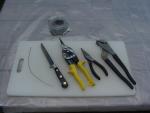
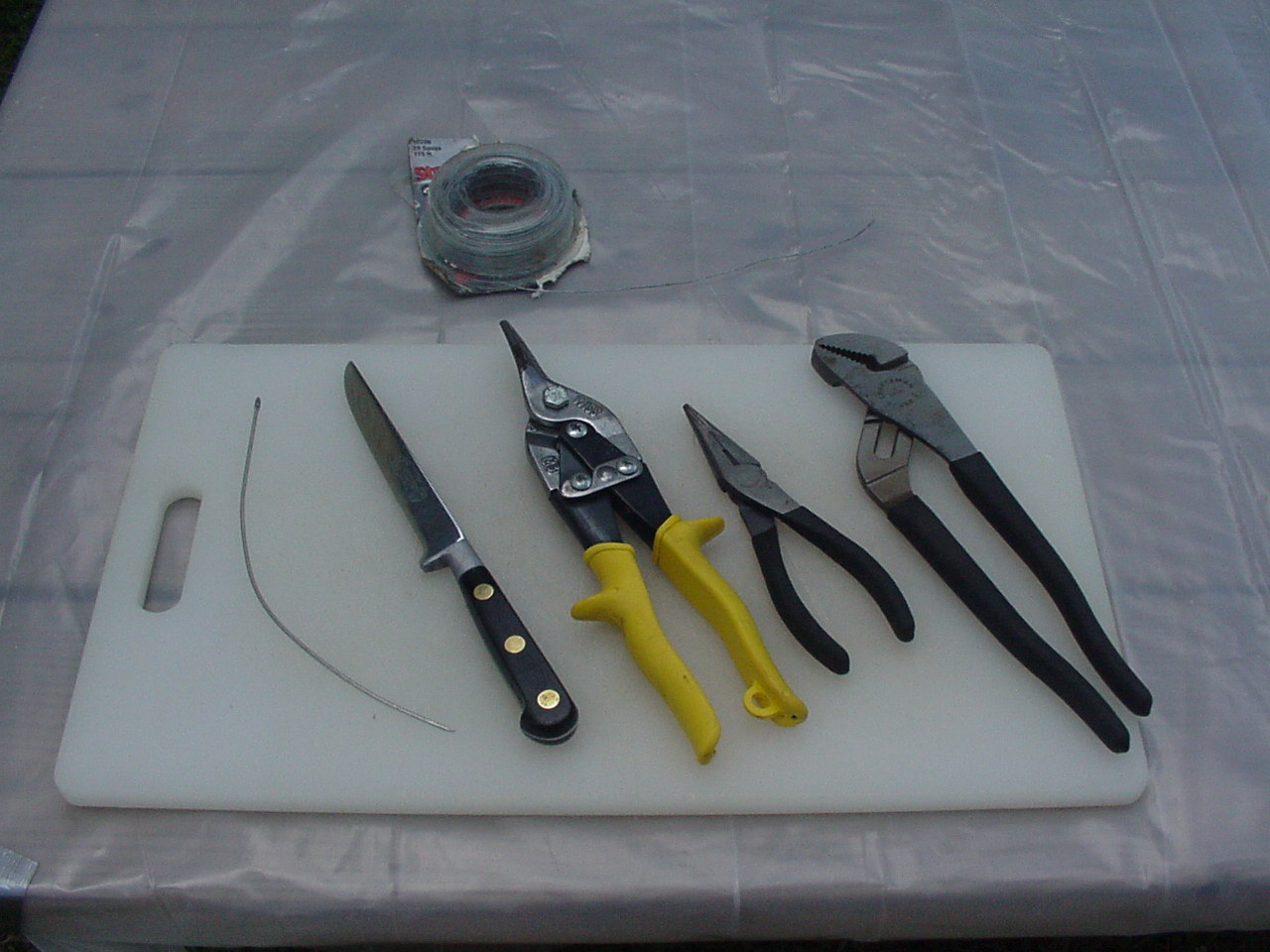
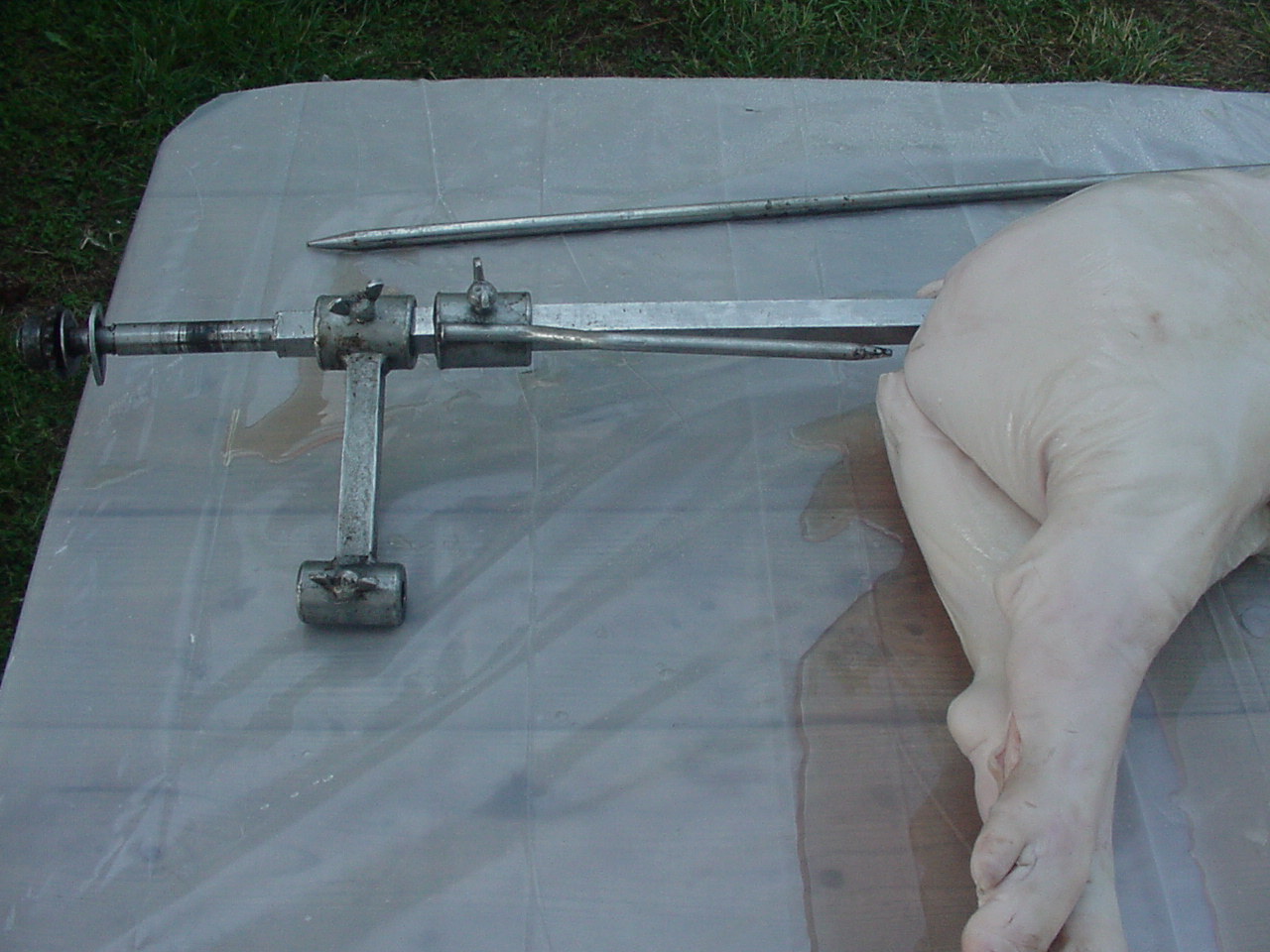
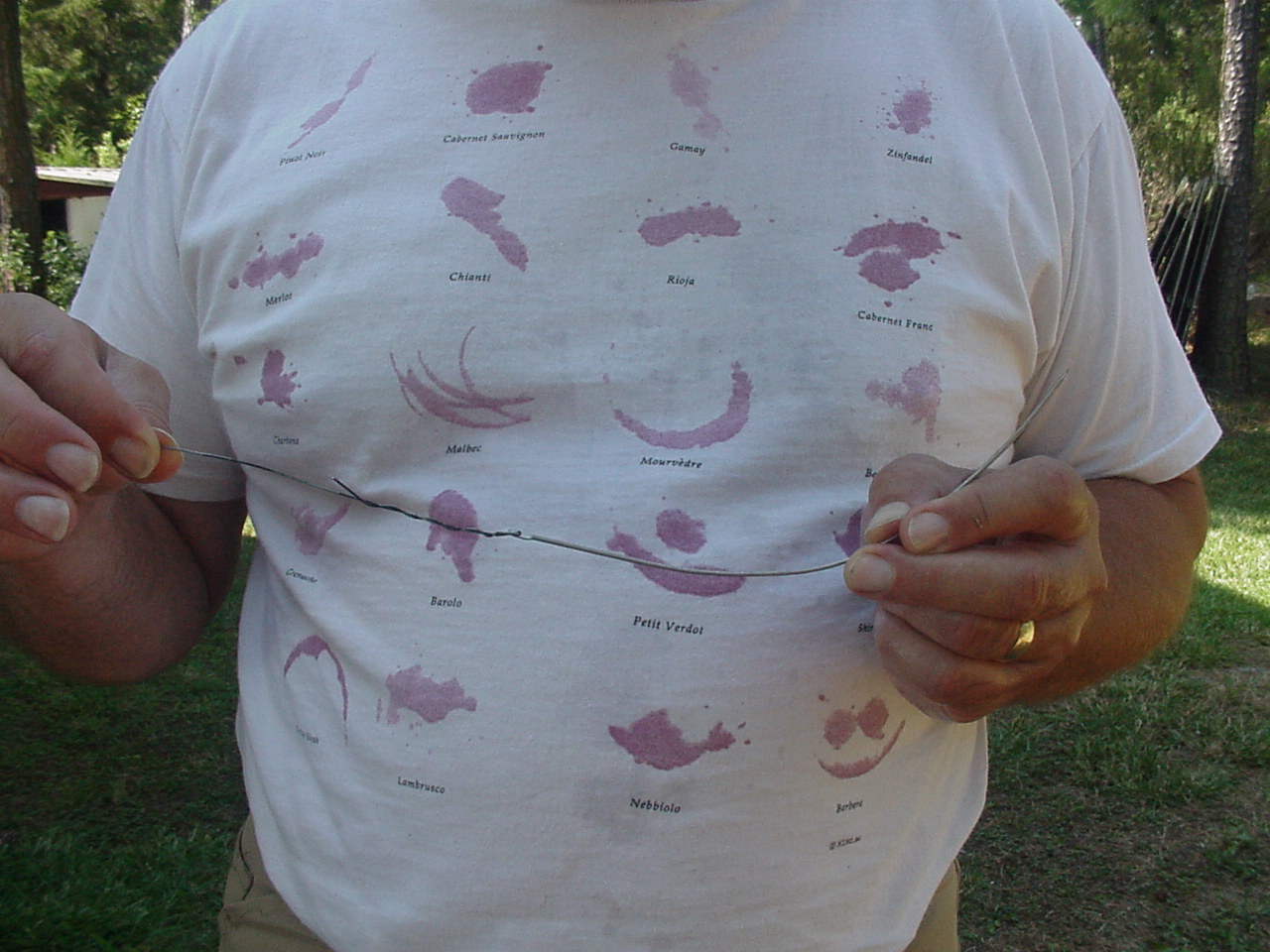
Tools of the Trade
Most of which are found
more often in toolboxes
than in kitchens.
|
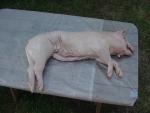
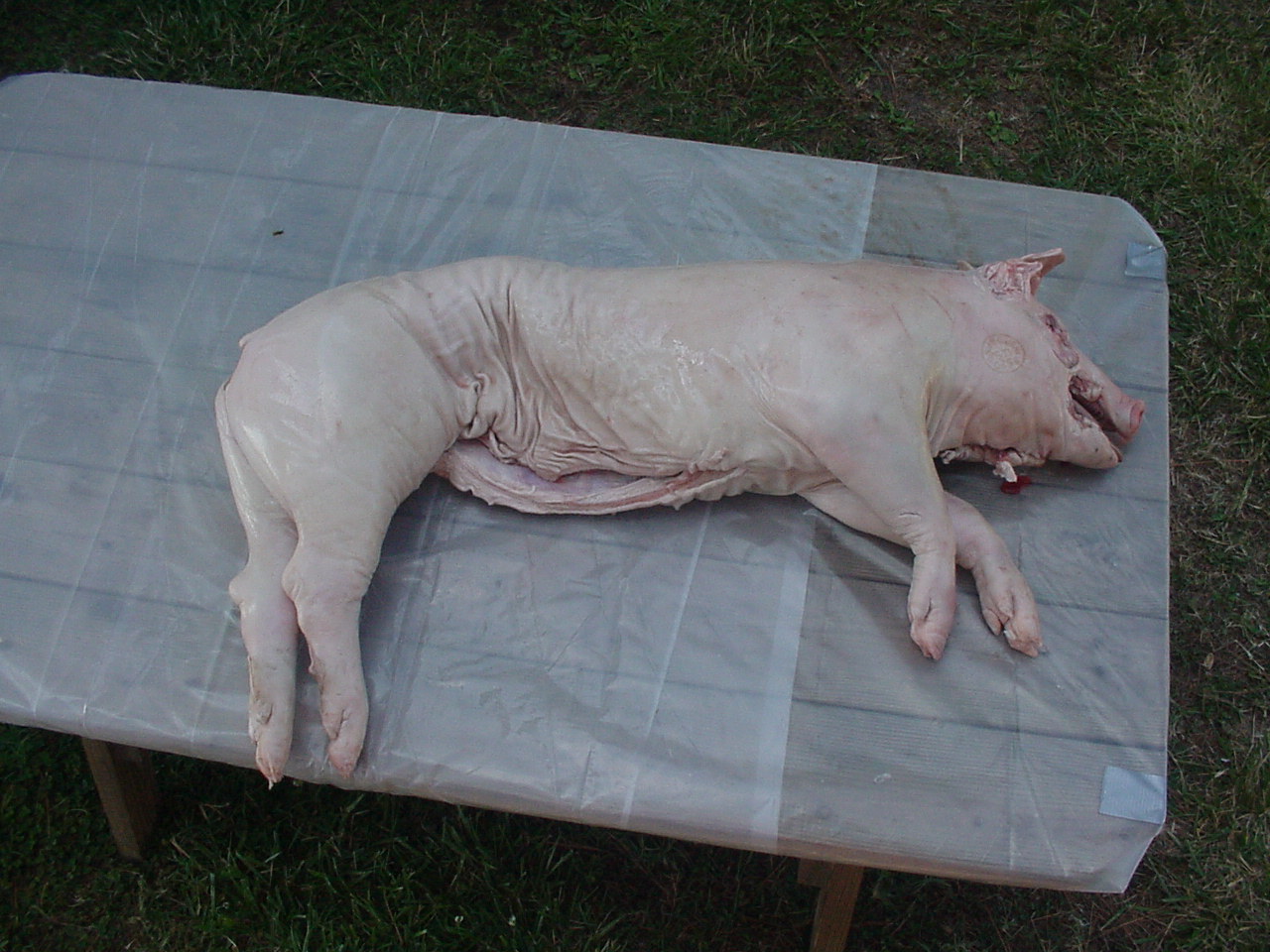
The Pig
As purchased:
gutted but not butterflied.
|
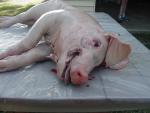
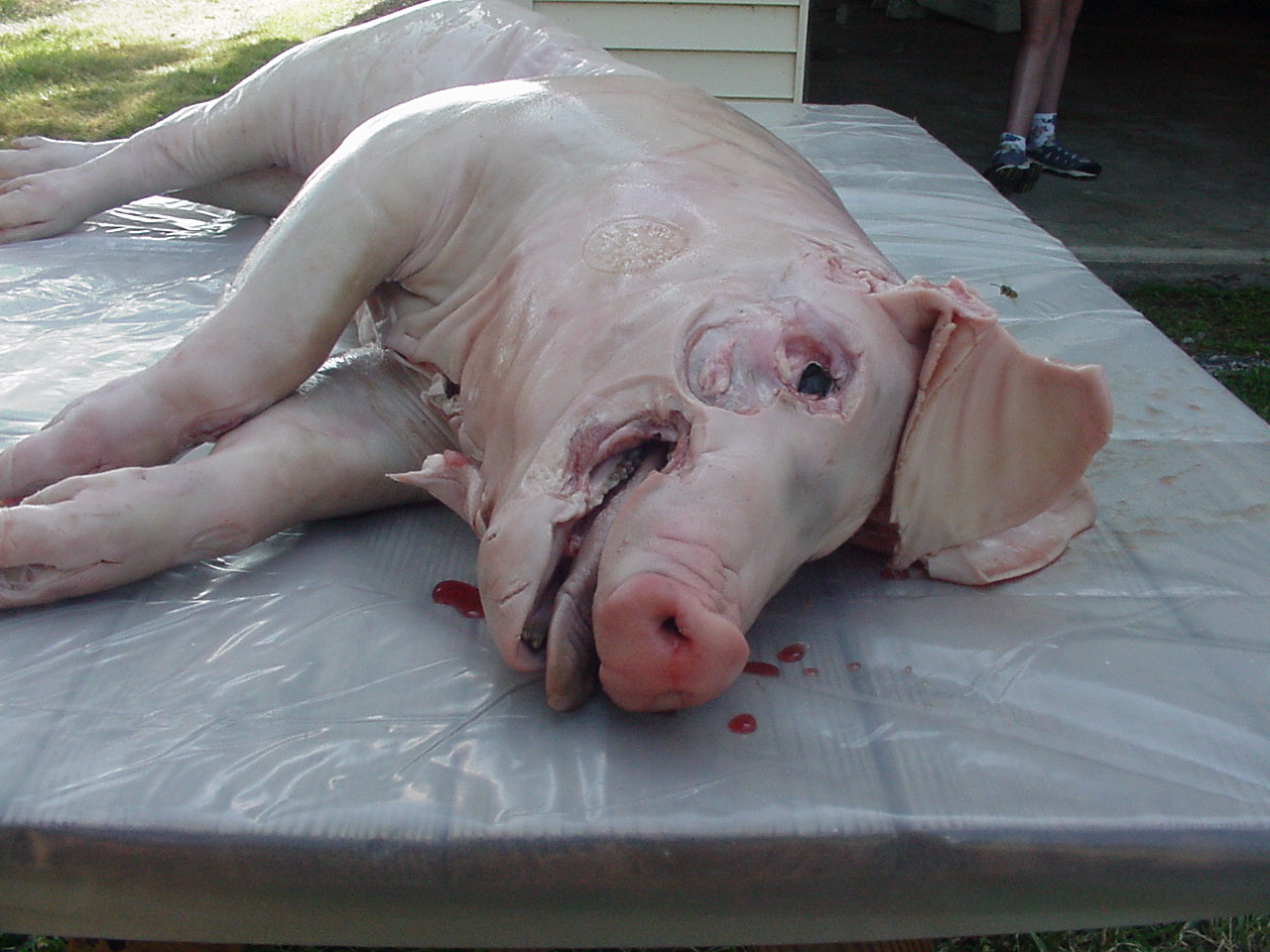
Smiley
A face only a mother could love!
|
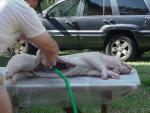
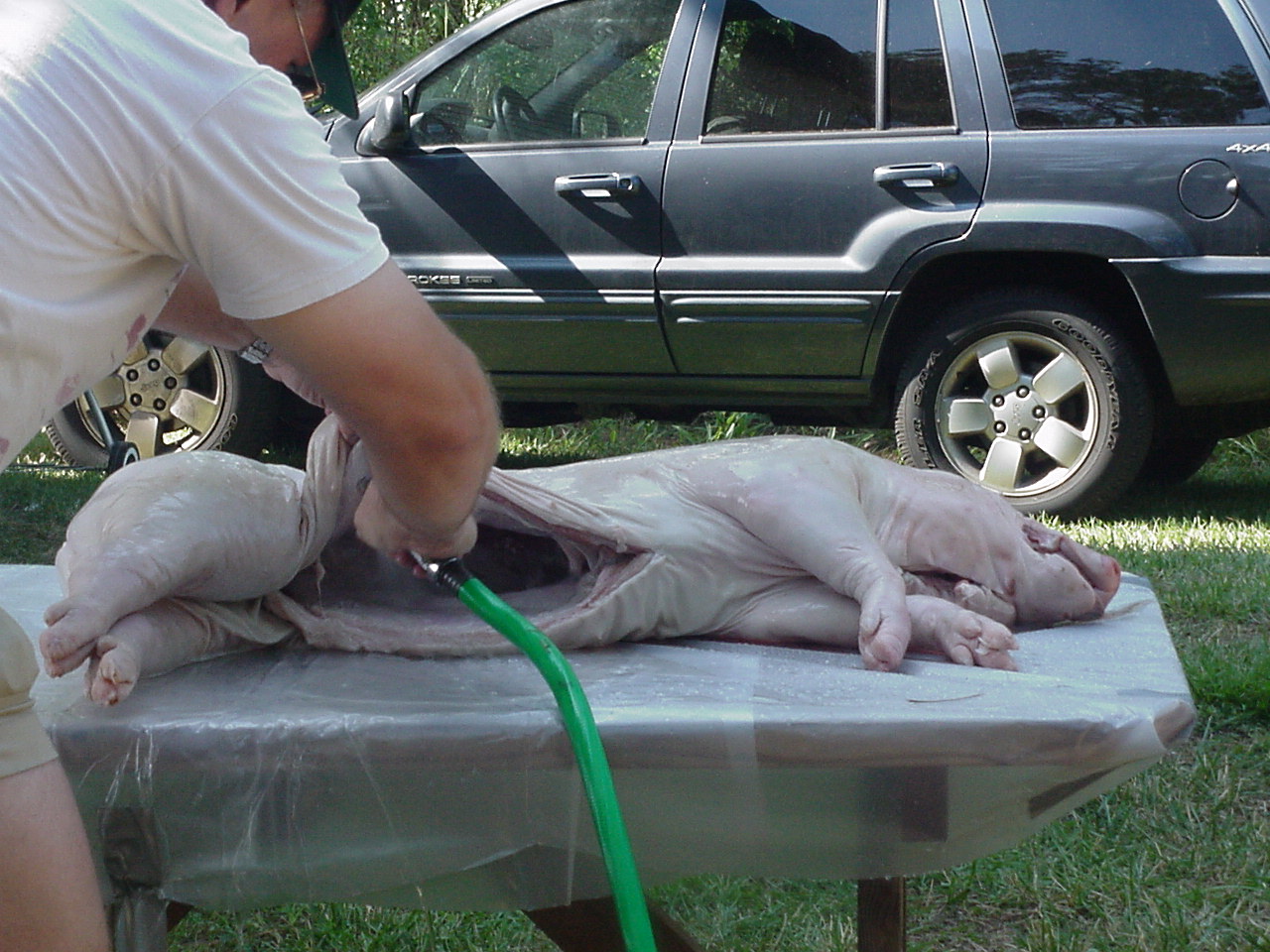
Cleaning
Hosing out the belly cavity.
|
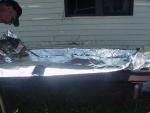
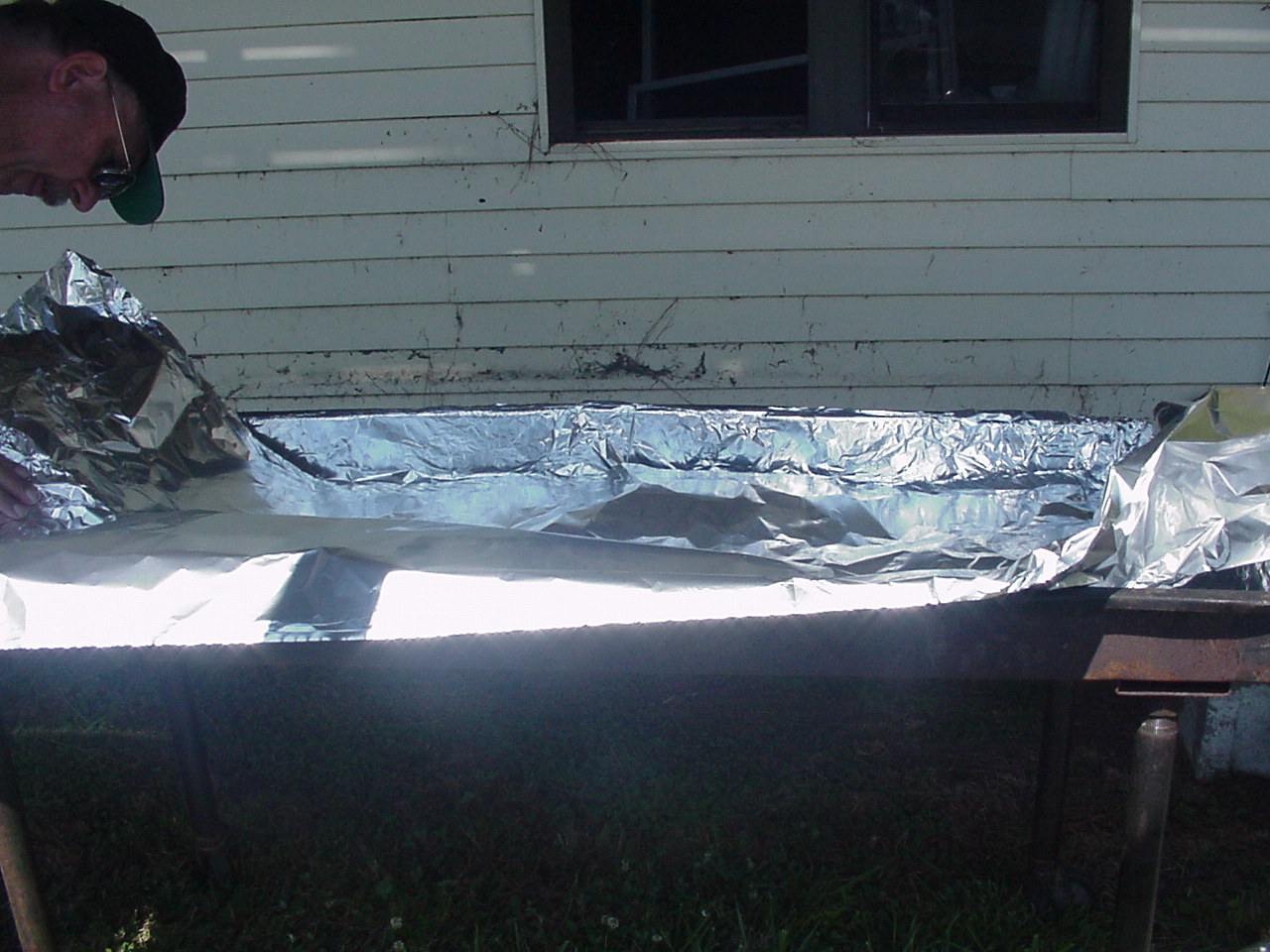
Grill Prep
The grill is lined with foil:
a BIG aid to cleanup the next day.
|
|
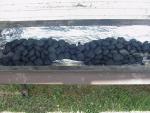
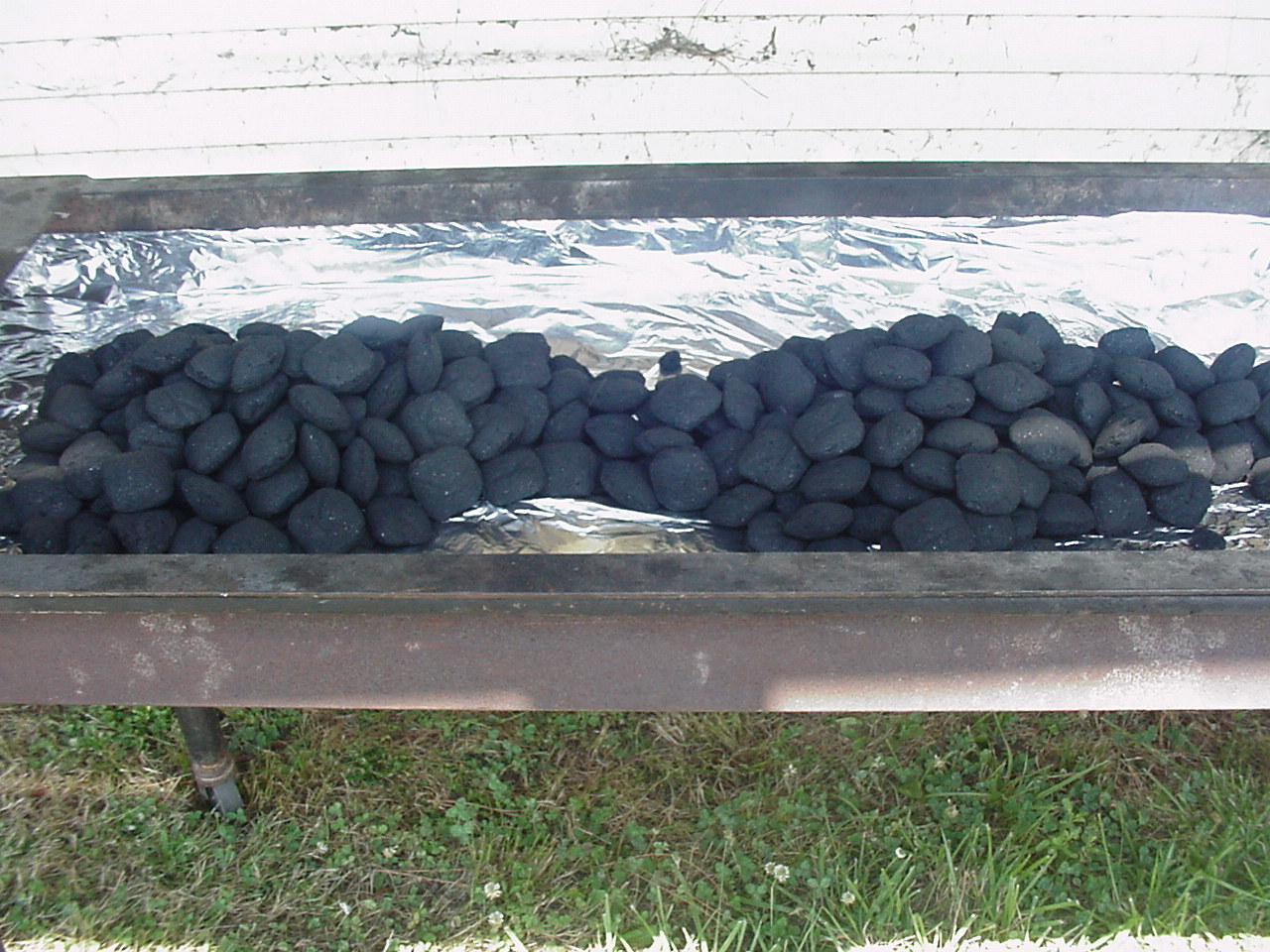
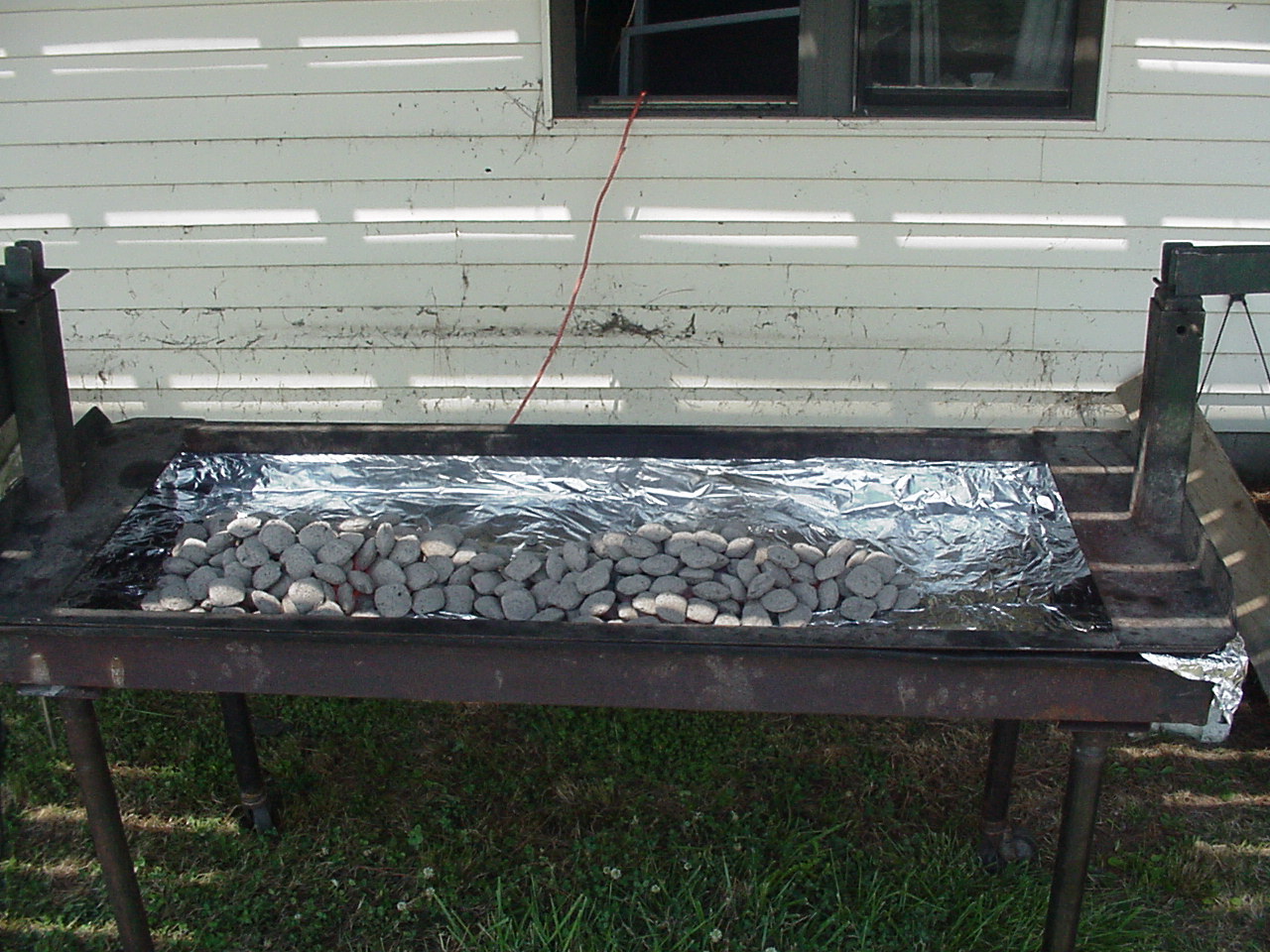
Charcoal Layout
It's a good idea to start the fire before preparing the pig, so that by the time the pig is ready, the fire will be also.
The charcoal is laid out in a "dog bone" shape (more at each end) to better cook the shoulders and hams.
|
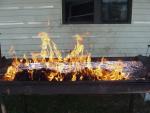
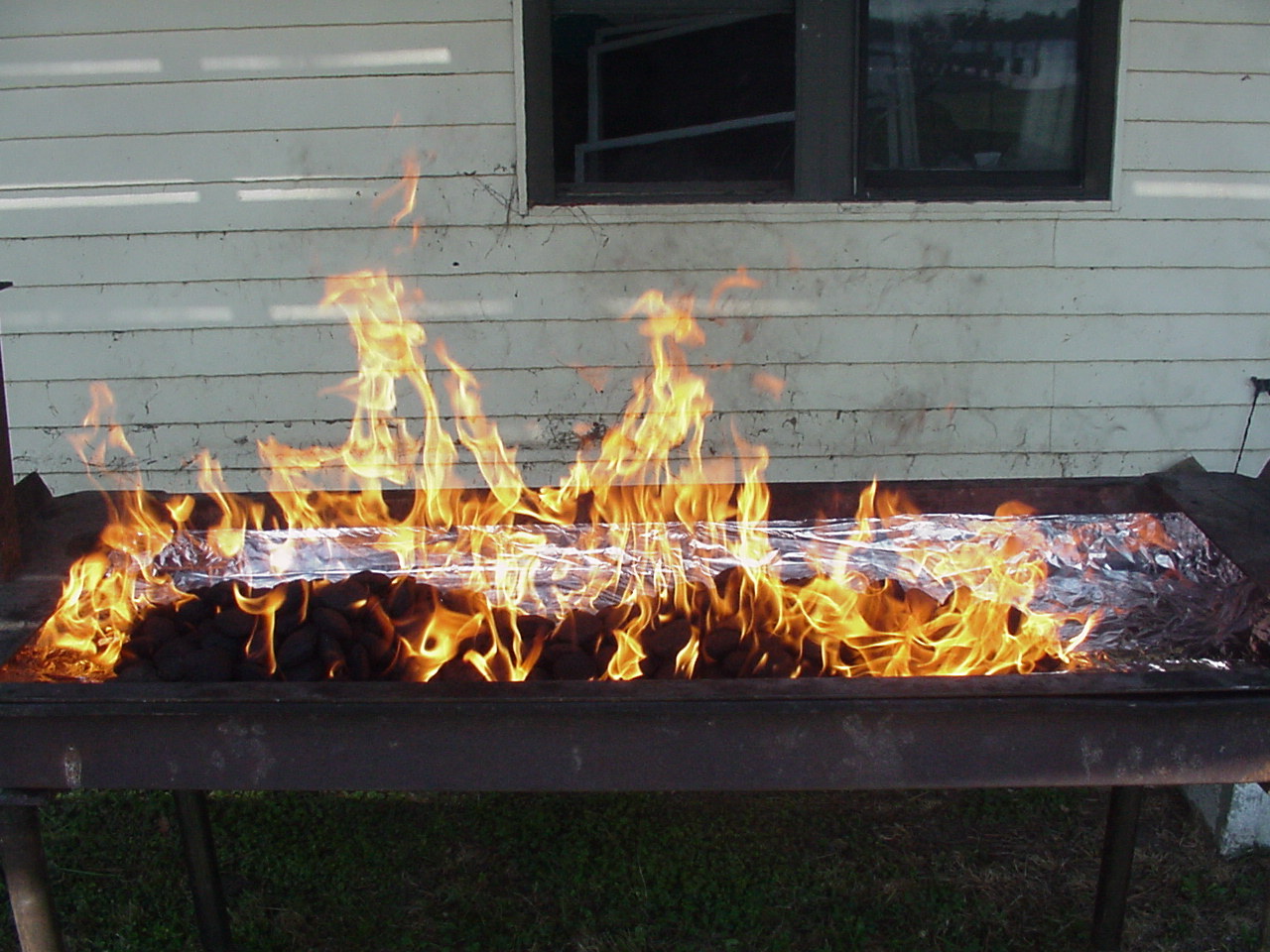
Start the Fire
Use plenty of lighter fluid
and flame on!
|
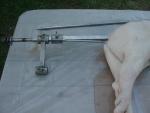
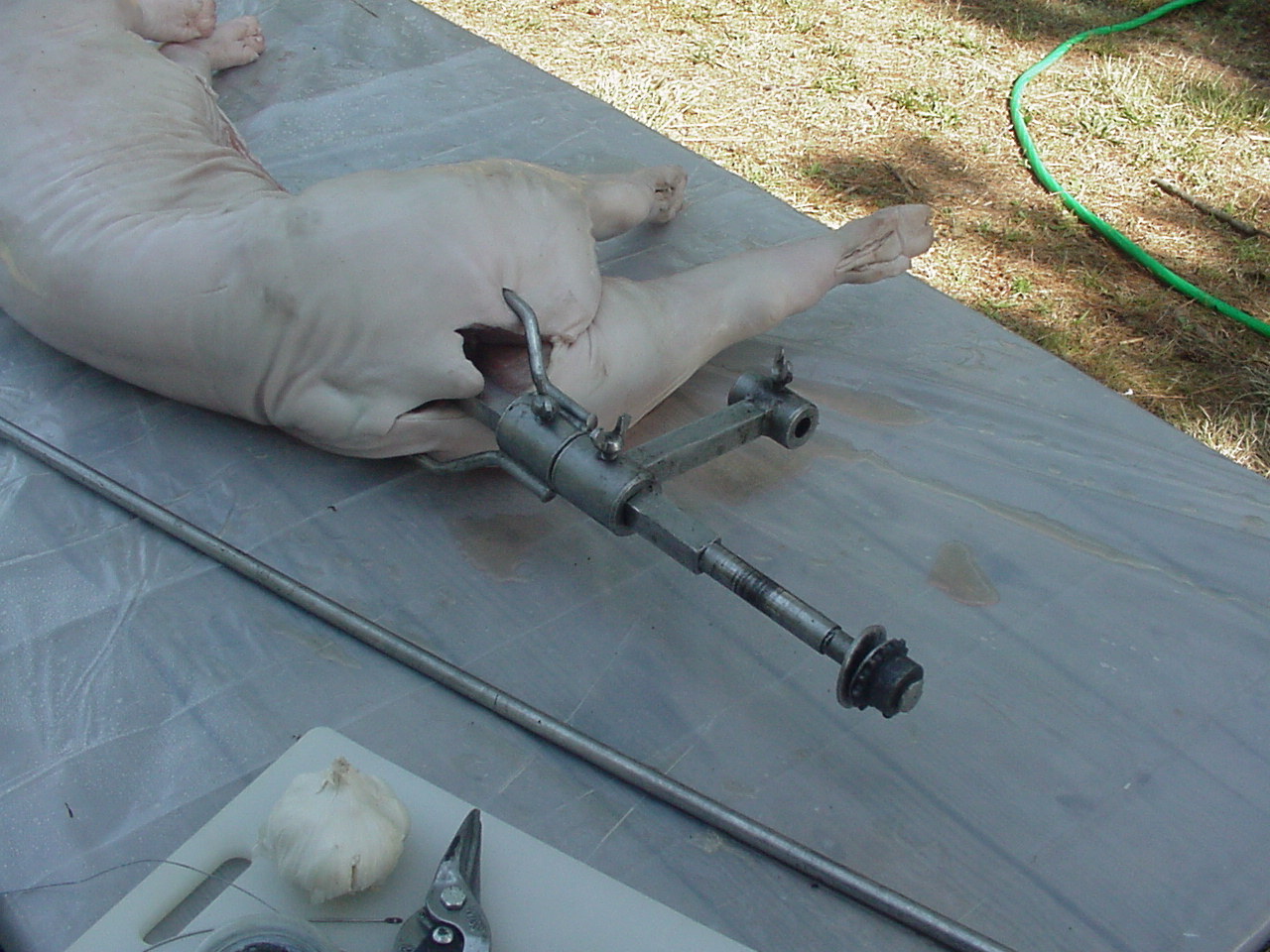
The Goomph Stick
The spit components must be assembled in the proper order, with the forks closest to the pig.
If you get this wrong and don't notice it until later, you'll be redoing a lot of work. Ask us how we know!
|
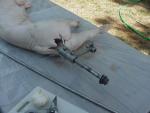
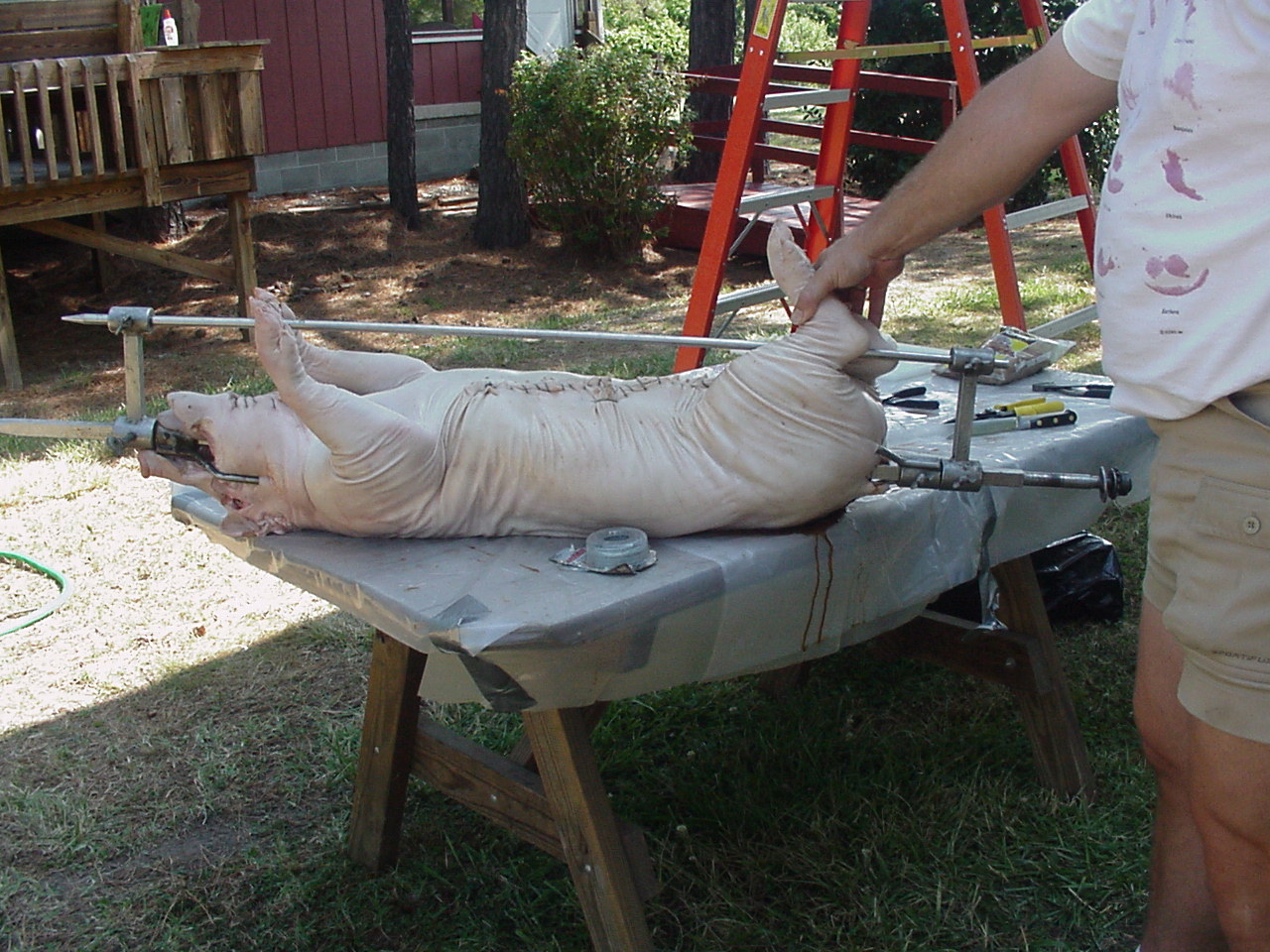
Spitting the Rear
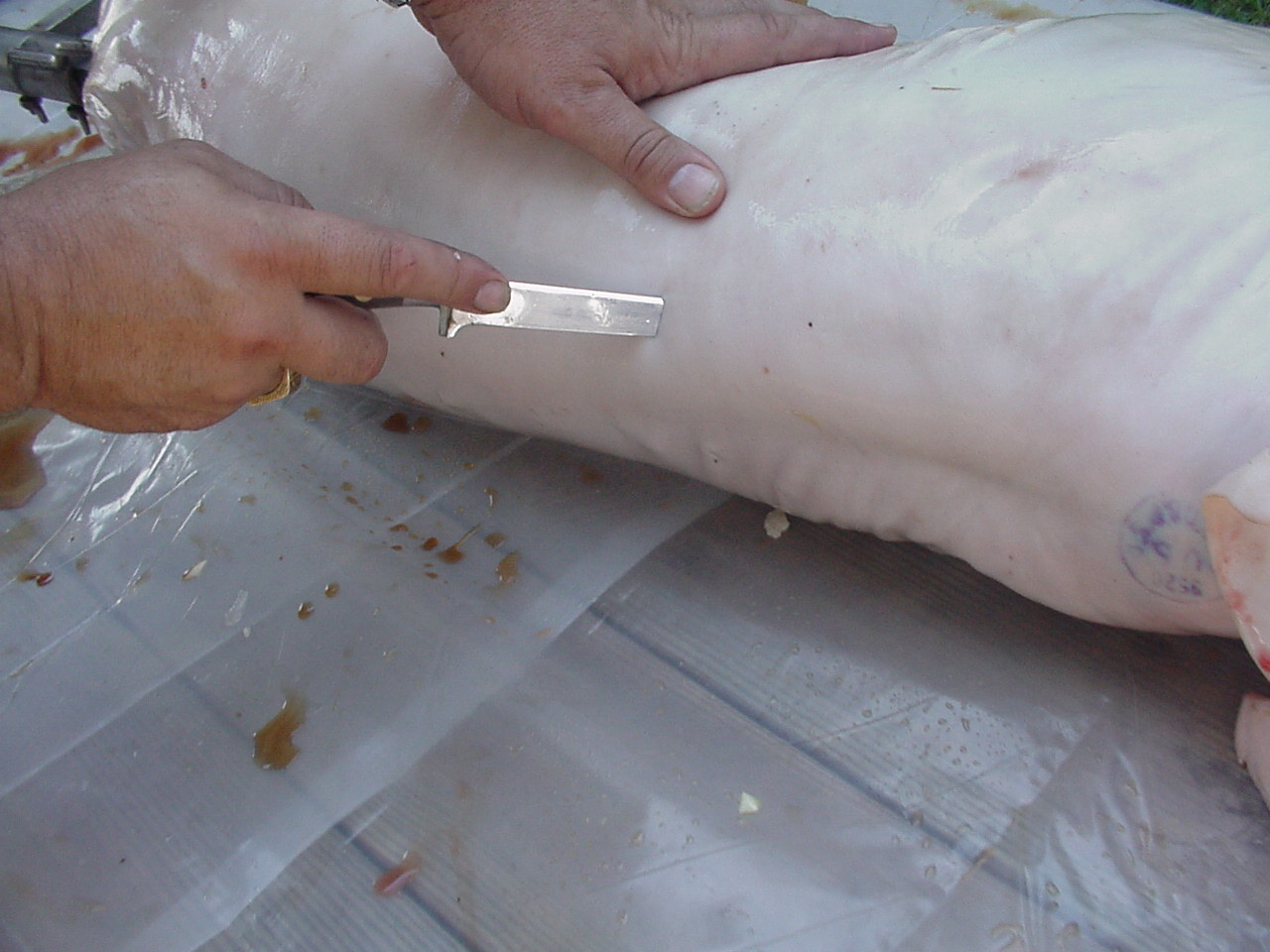
The skin on the hams is slit to
make it easier to insert the forks.
|
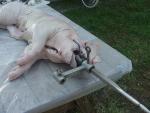
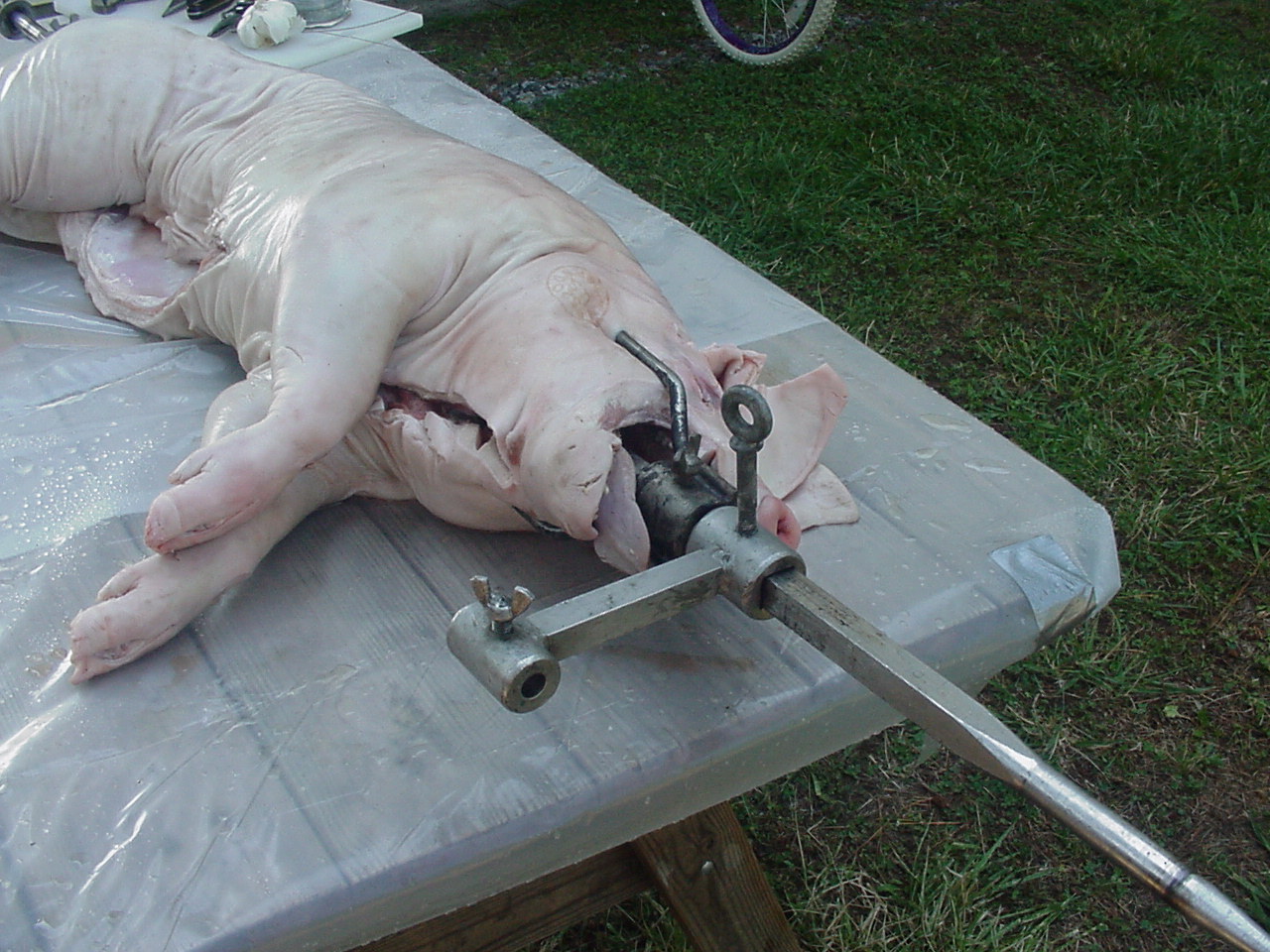
Spitting the Head
The skin of the head is also slit to allow the forks to penetrate more easily.
Again, note the proper
order of the components, and the forks must be properly aligned
to fit around the head.
|
|
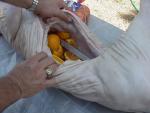
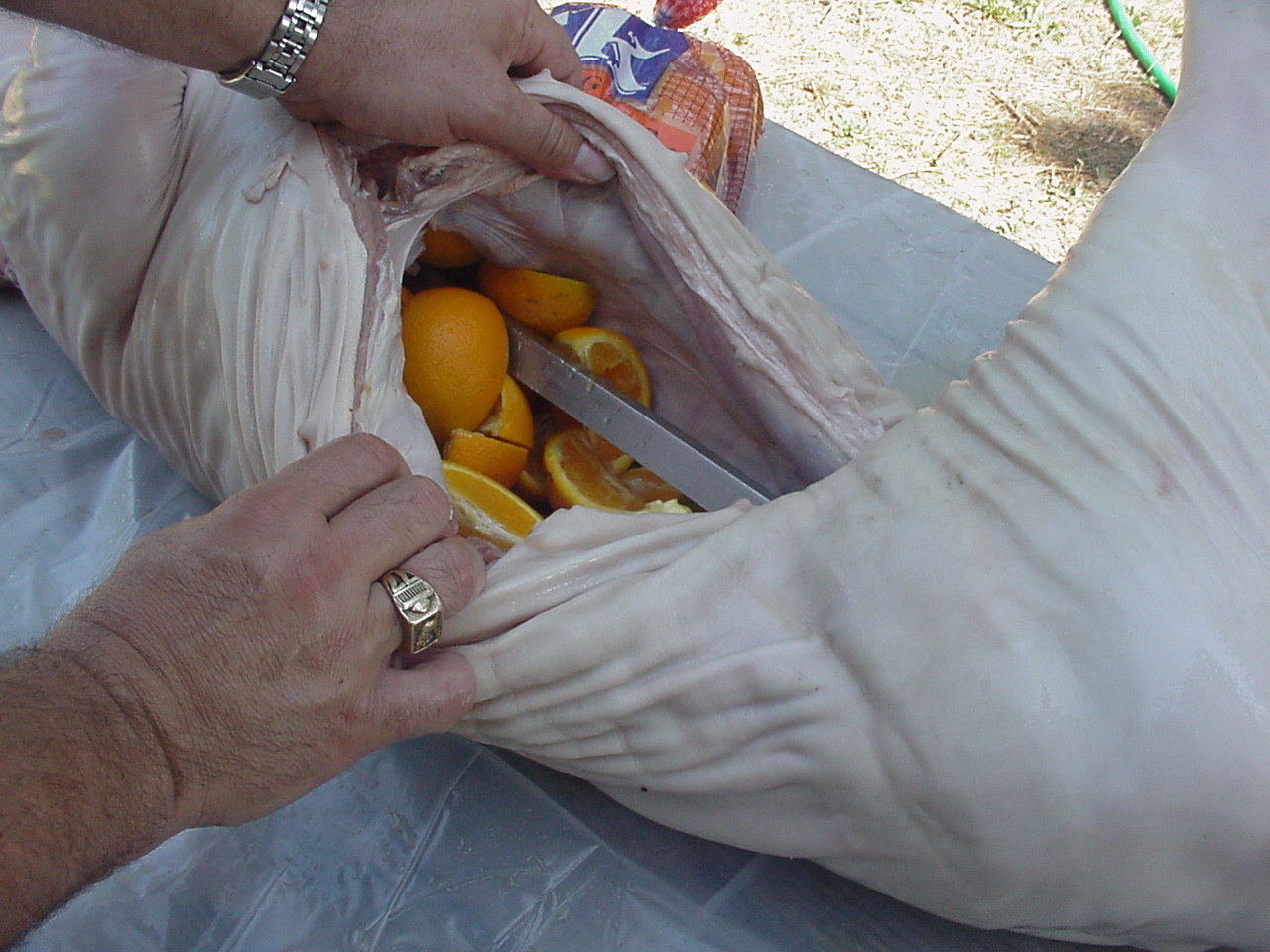
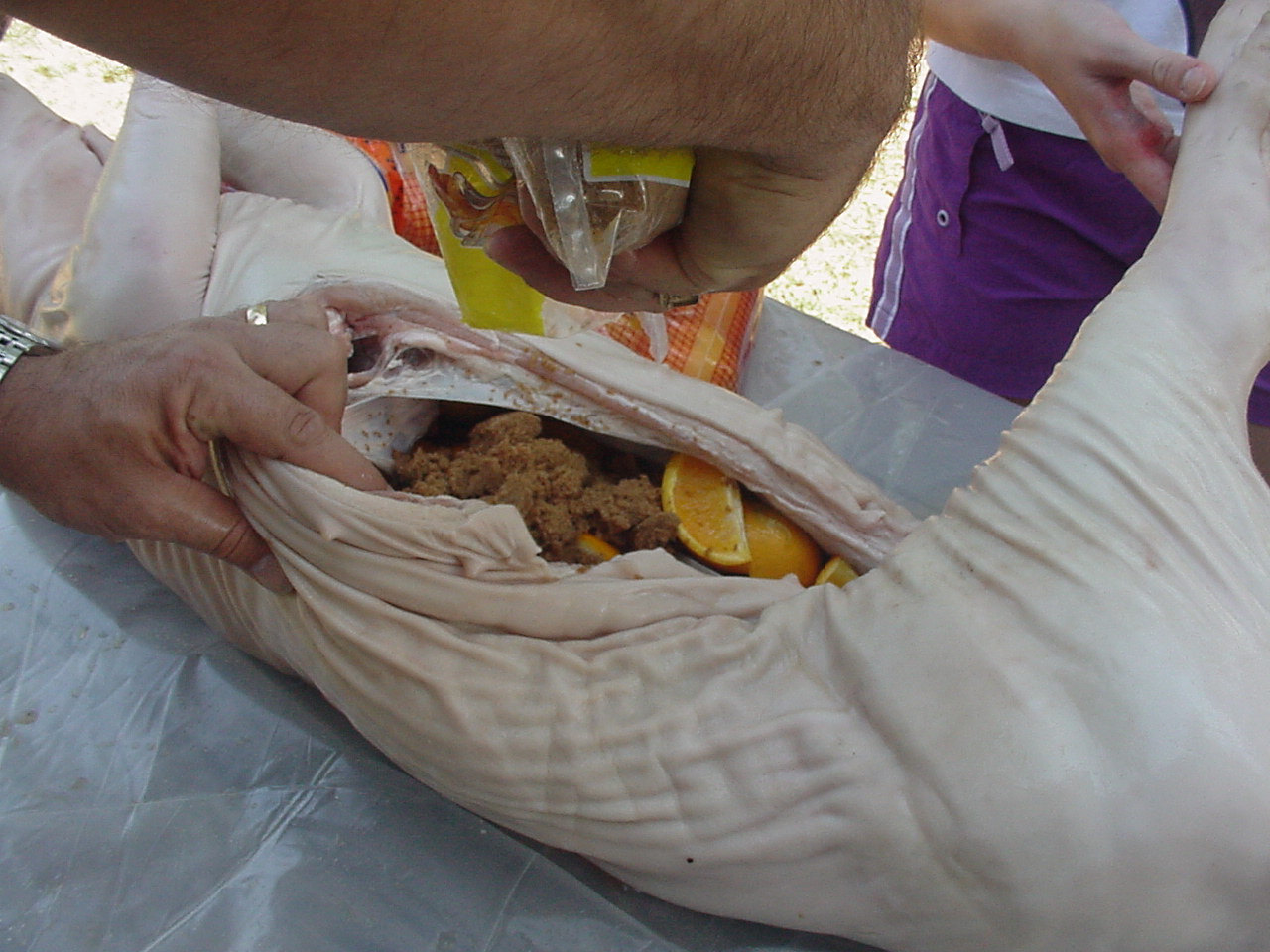
Stuffing with Oranges
After spitting, the belly cavity is
filled with quartered oranges.
|
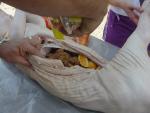
Add Brown Sugar
A box of brown sugar is added to the oranges. As the pig cooks, the brown sugar and orange juice create a basting sauce
that really only flavors the ribs, but it keeps the whole pig moist and it smells oh so good!
|
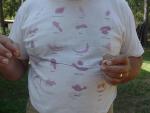
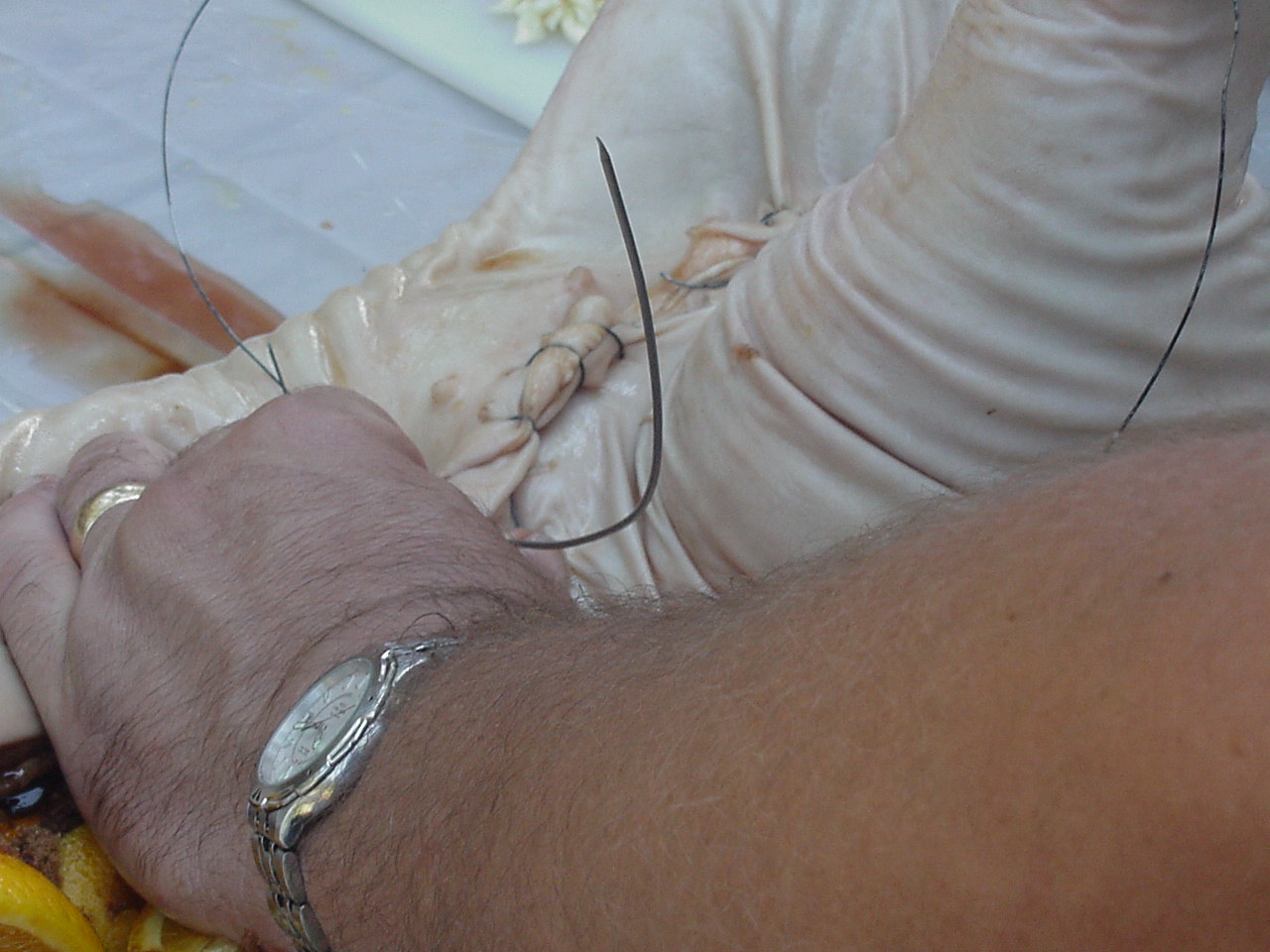
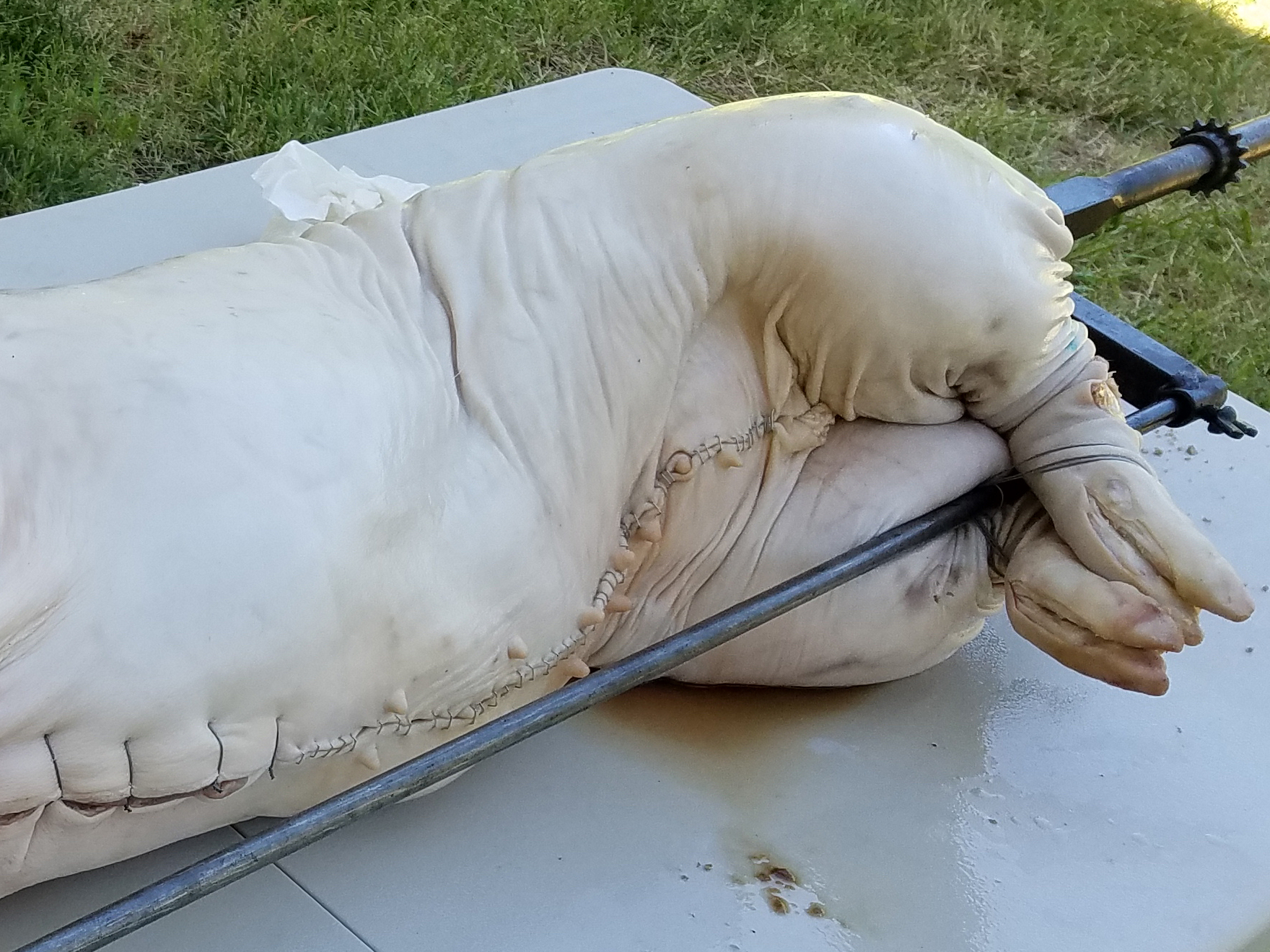
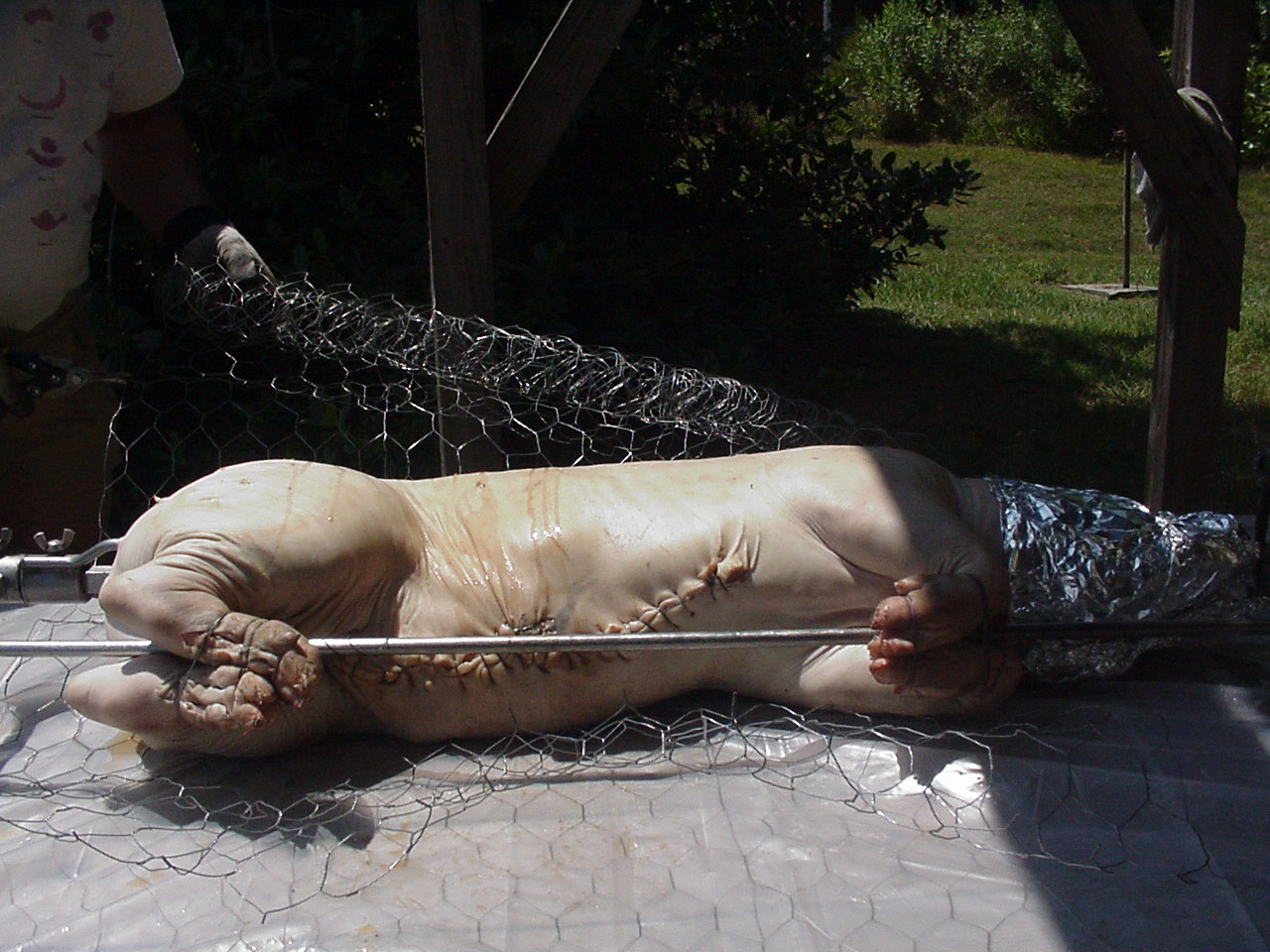
Suture, Please
A curved offshore bait rigging
needle is used to stitch the belly cavity closed with the hardware
store equivalent of baling wire
(or a slightly lighter gauge).
We're not talking 4/0 silk here!
|
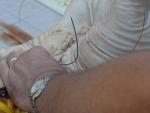
Closing
Stitching the belly closed.
|
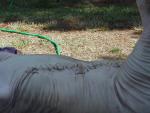
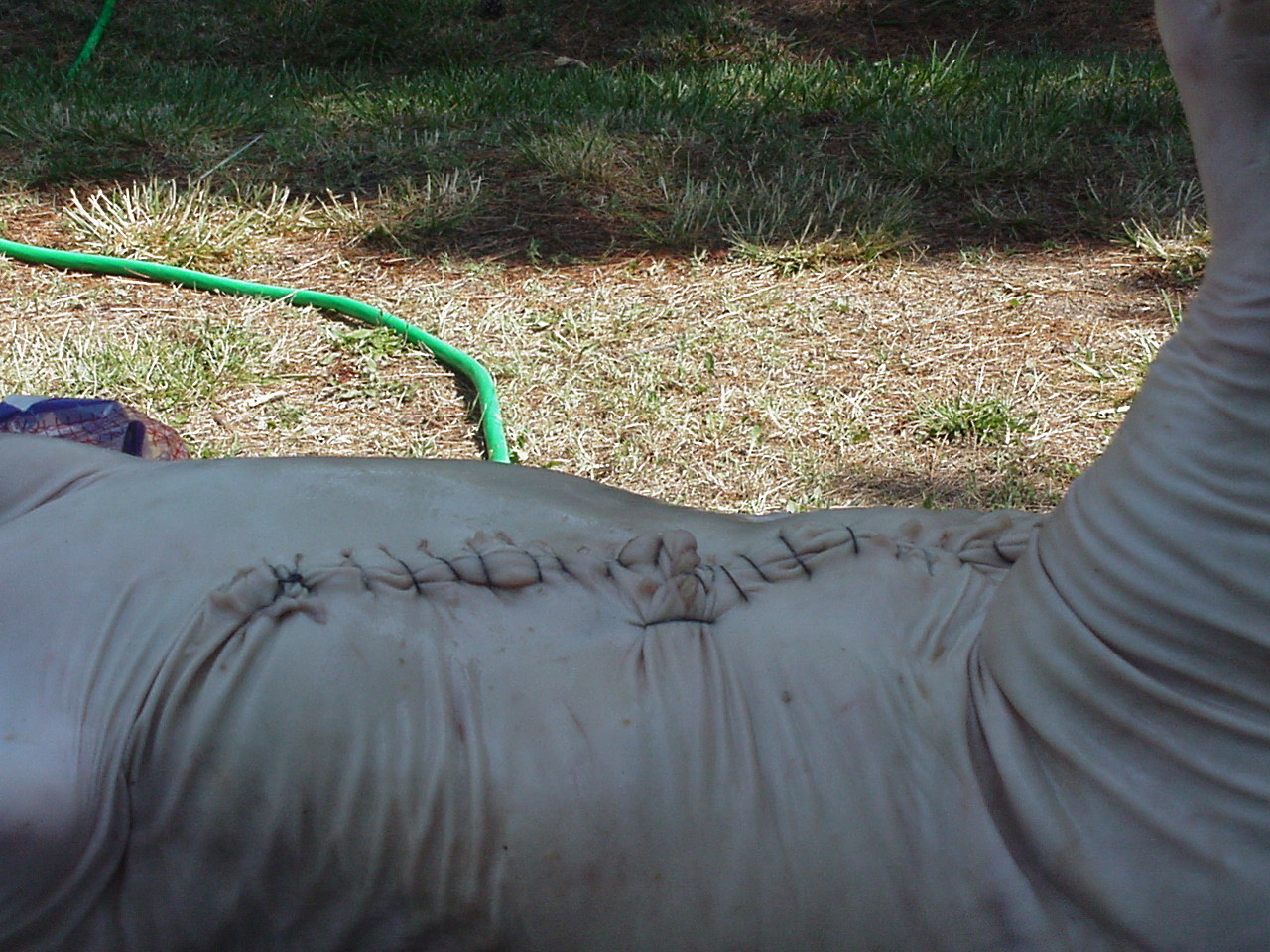
Closed
These stitches might leave a scar,
but the patient won't survive to complain about it.
|
|
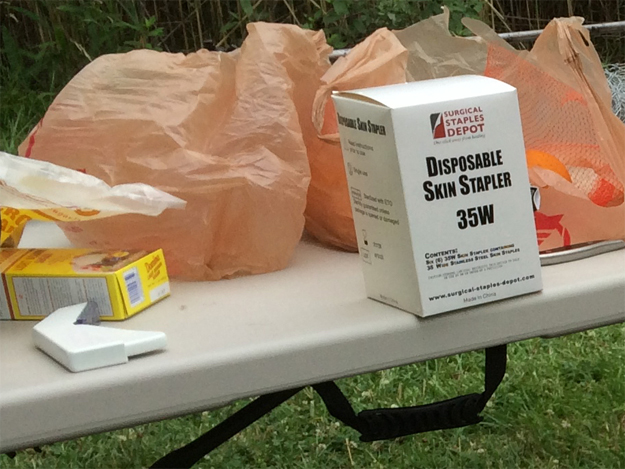
Alternate Closing Method
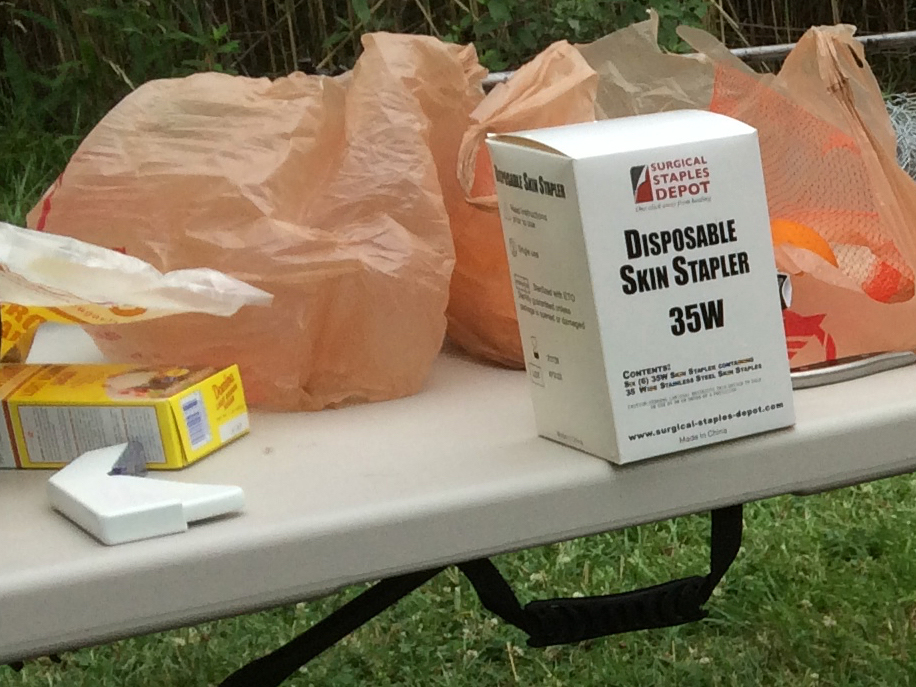
A disposable surgical staple gun
is a faster and easier way
to do some of the closing.
(Staple gun is to the left)
|
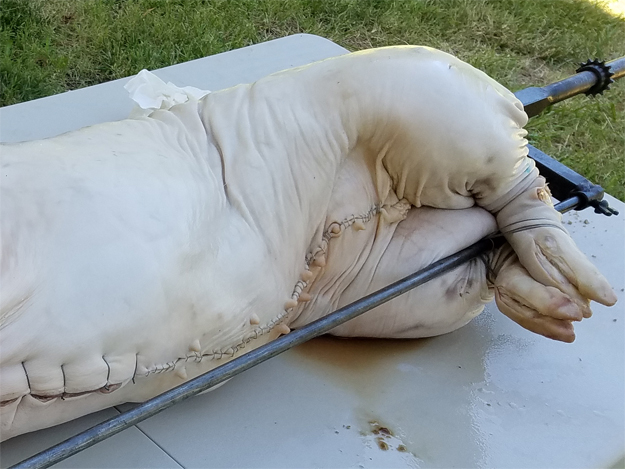
Staples
And this is what it looks like.
|
Ready to Truss
The "foot bar" is added
to the spit assembly.
|
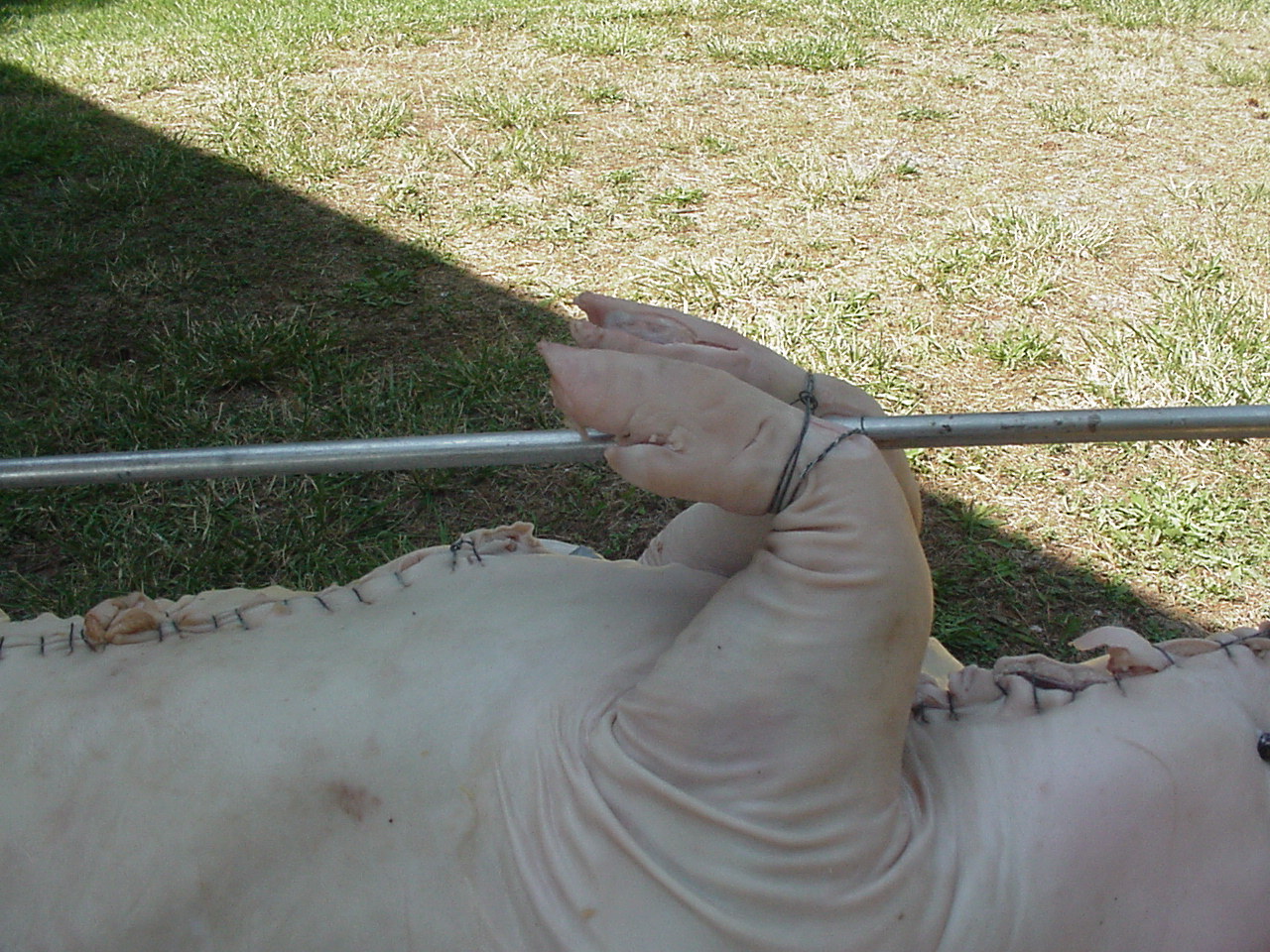
Trussed Front
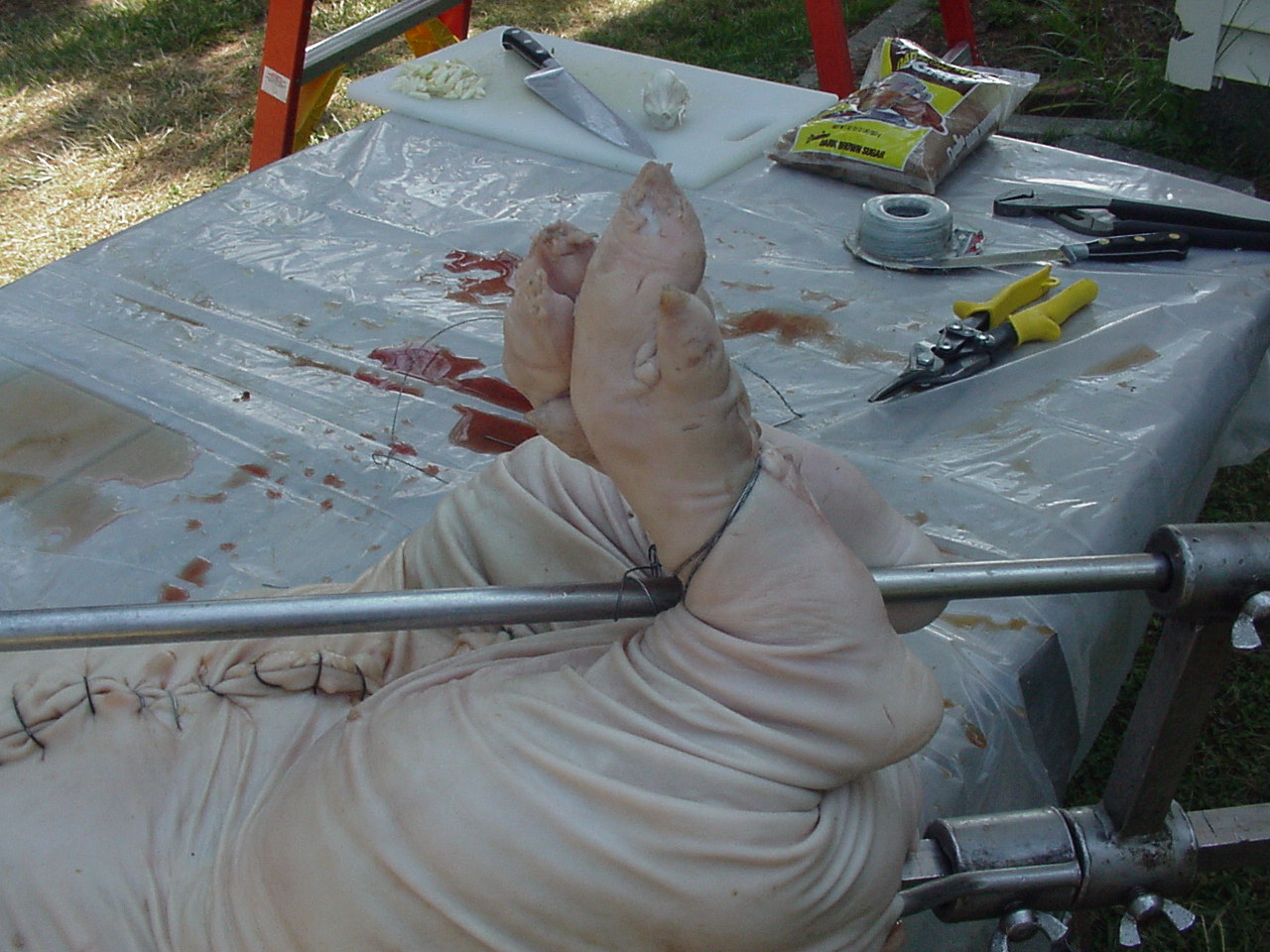
The front legs are secured to
the "foot bar" to keep them from
flopping around,
using the same
wire that was used for stitching.
|
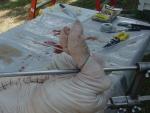
Trussed Rear
The rear legs are secured to
the "foot bar" in the same way.
|
|
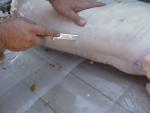
Puncture Wounds
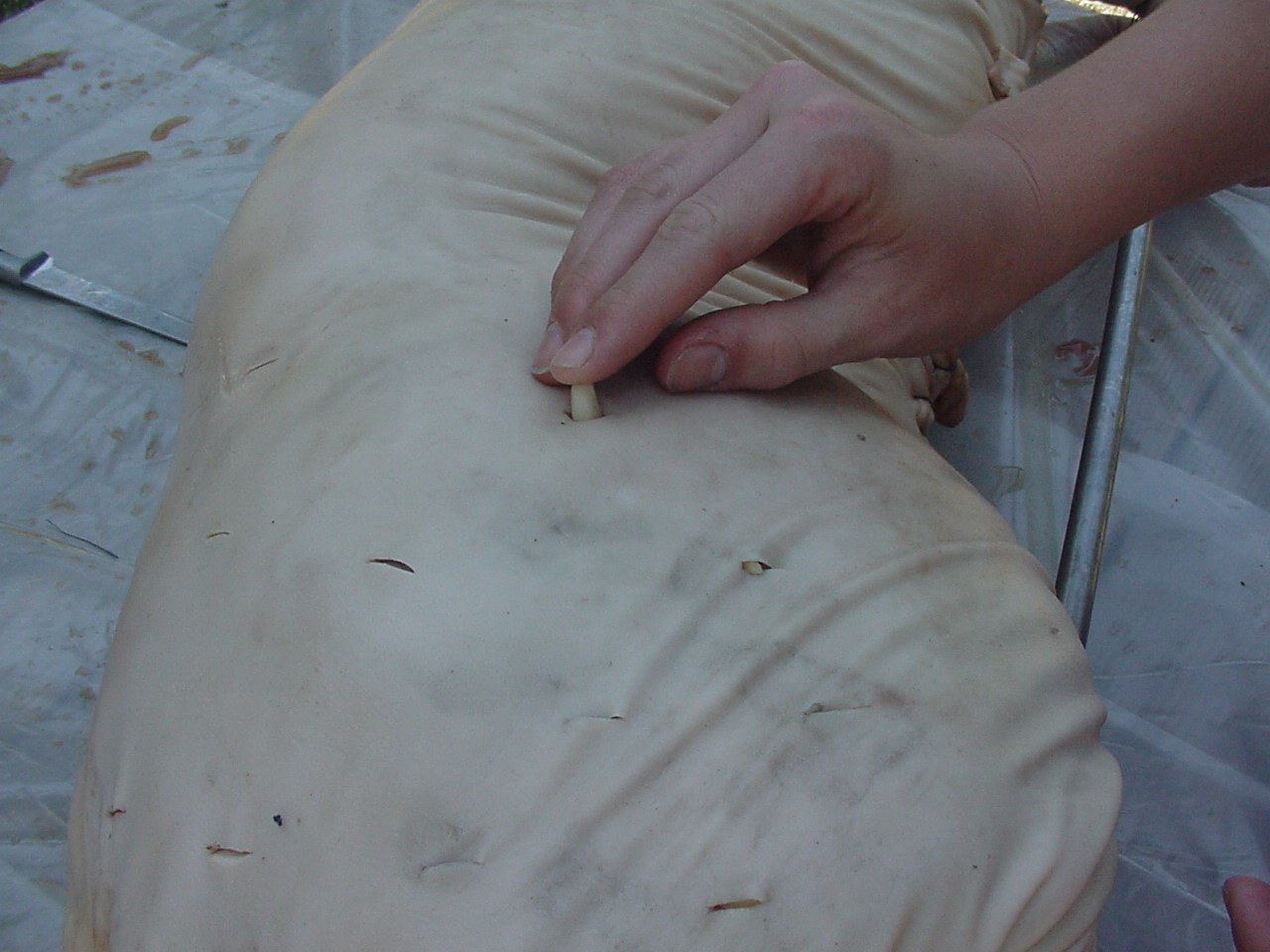
Deep punctures are made in the shoulders, hams and tenderloin with the tip of a very sharp knife to allow slices of garlic to be inserted deep into the meat for extra flavor.
|
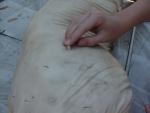
Flavor Bits
Inserting the garlic.
A whole head of garlic is
used for an 85 pound pig.
|
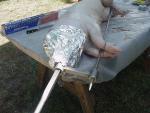
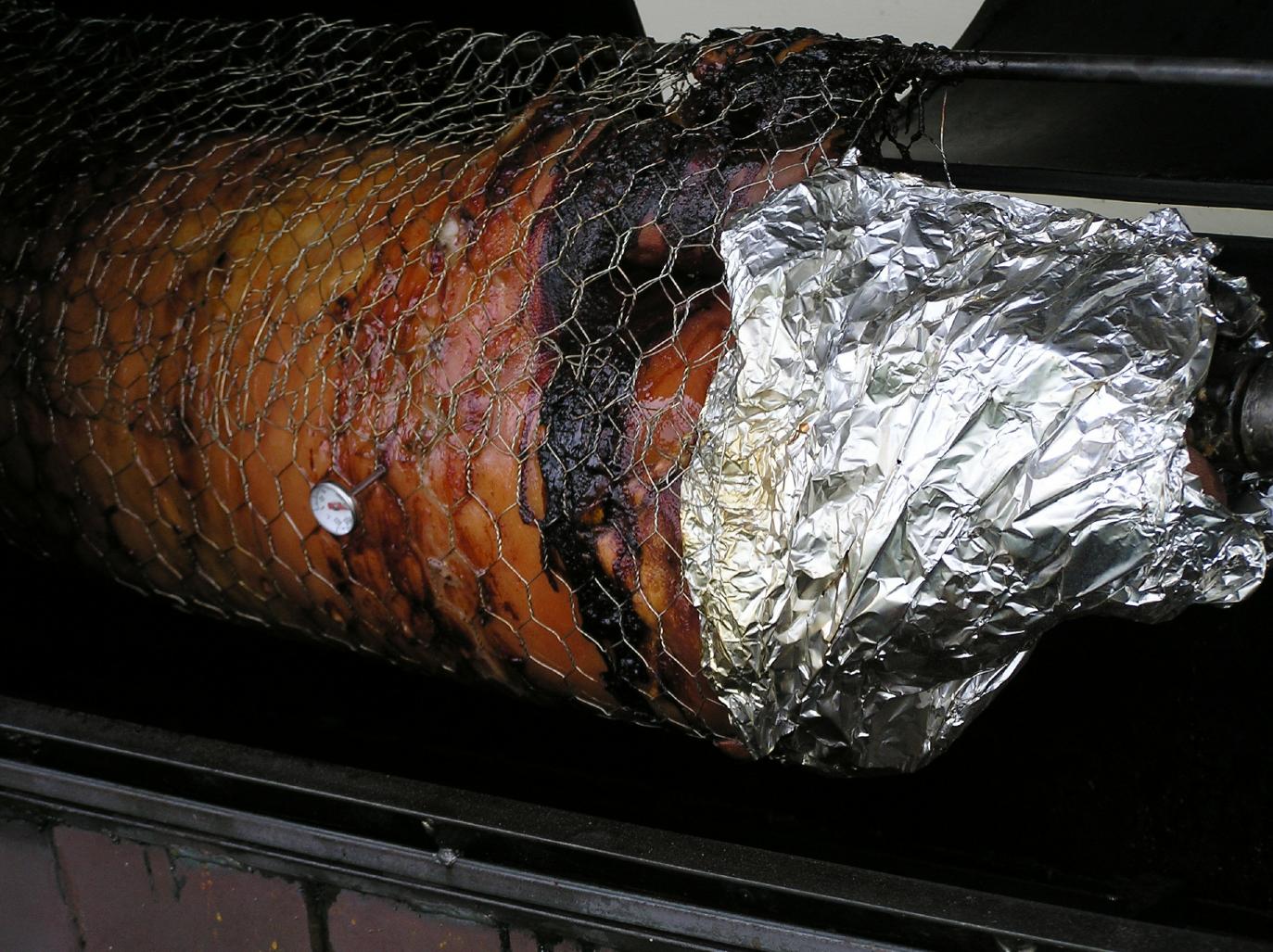
Would You Like a Last Cigarette?
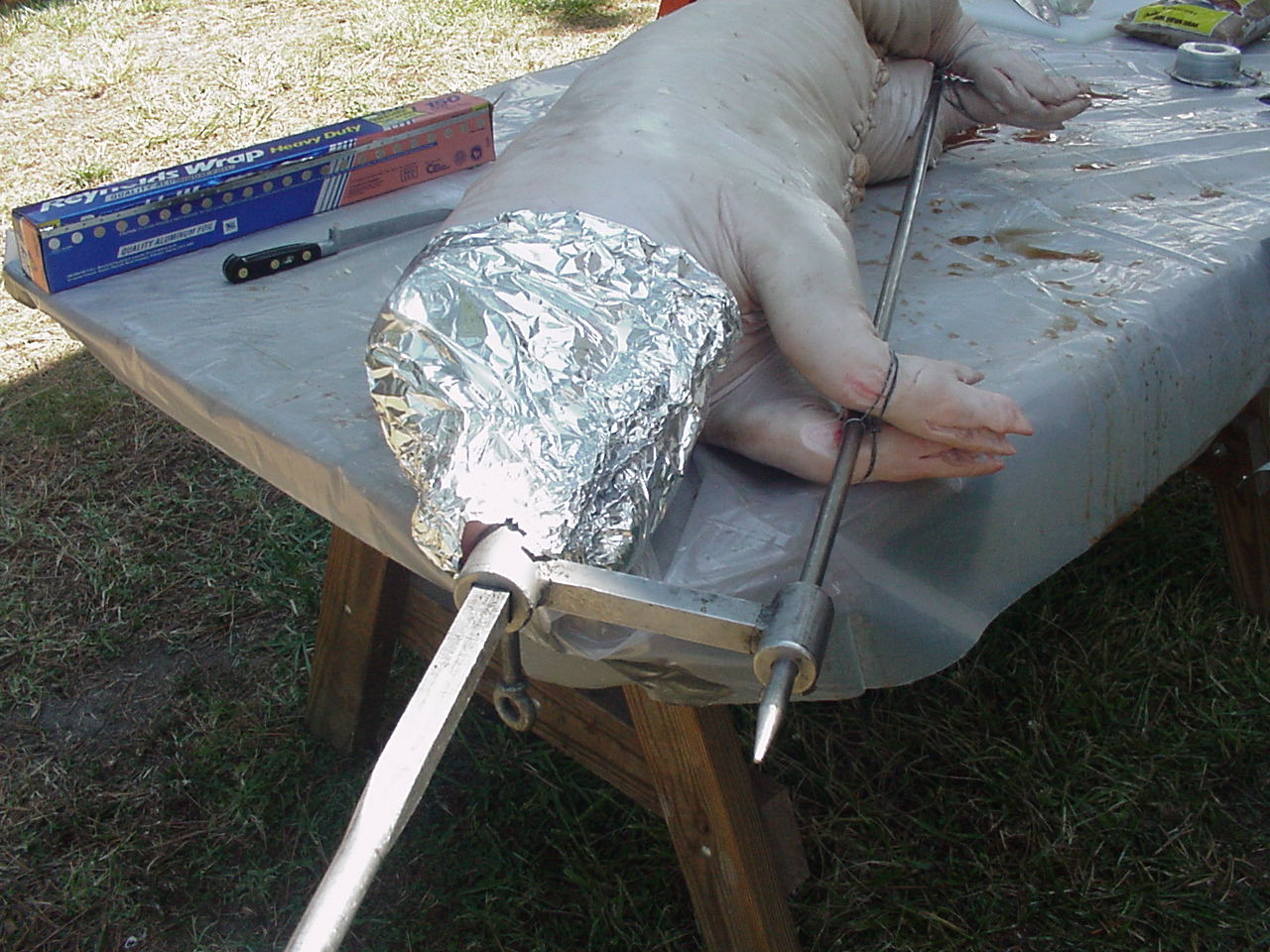
The victim is blindfolded with aluminum foil so that it can't see
what is about to happen, and
to keep the head from charring
so that it may be used for
presentation on the serving table.
|
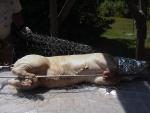
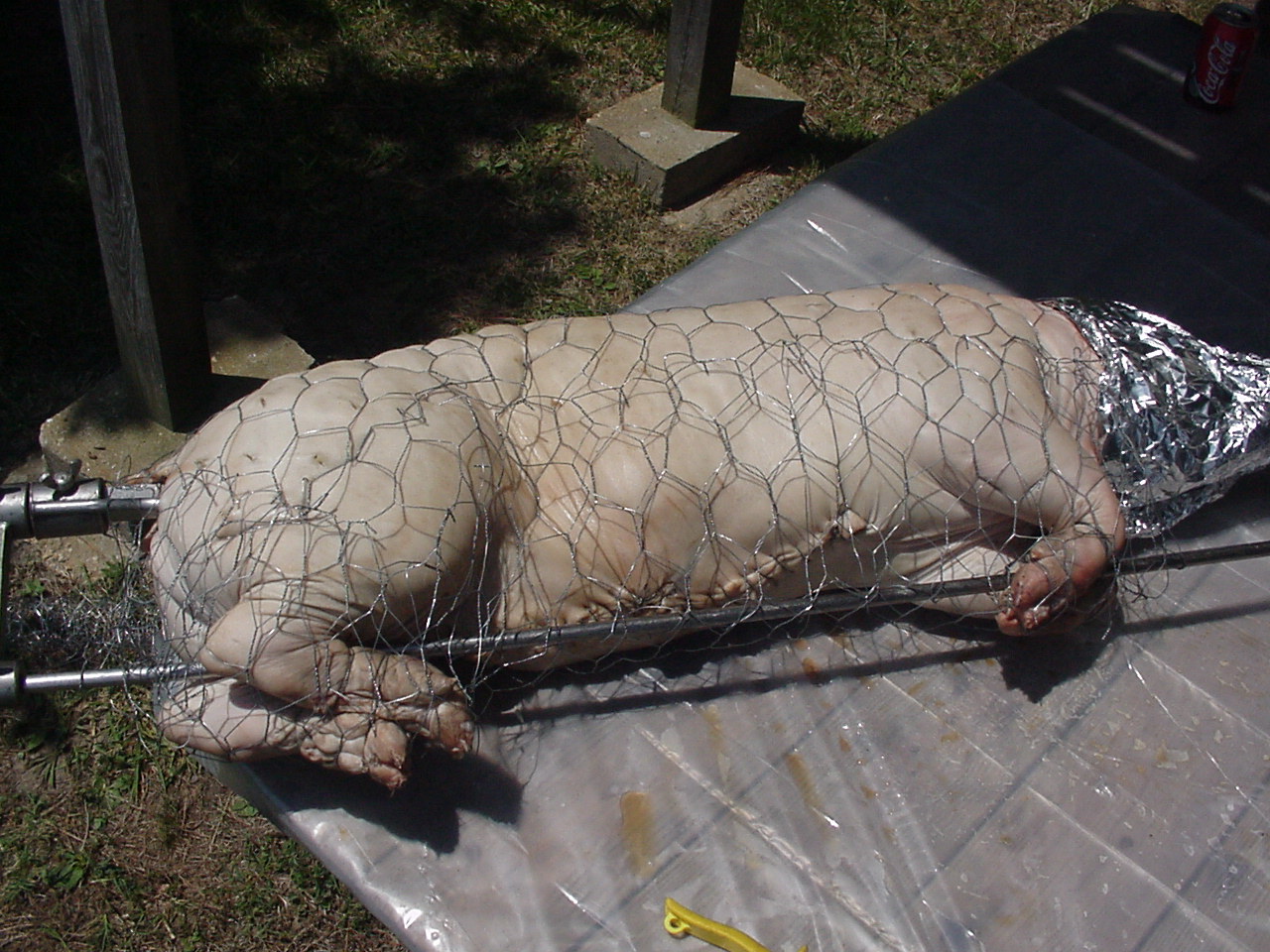
Chikin Wahr
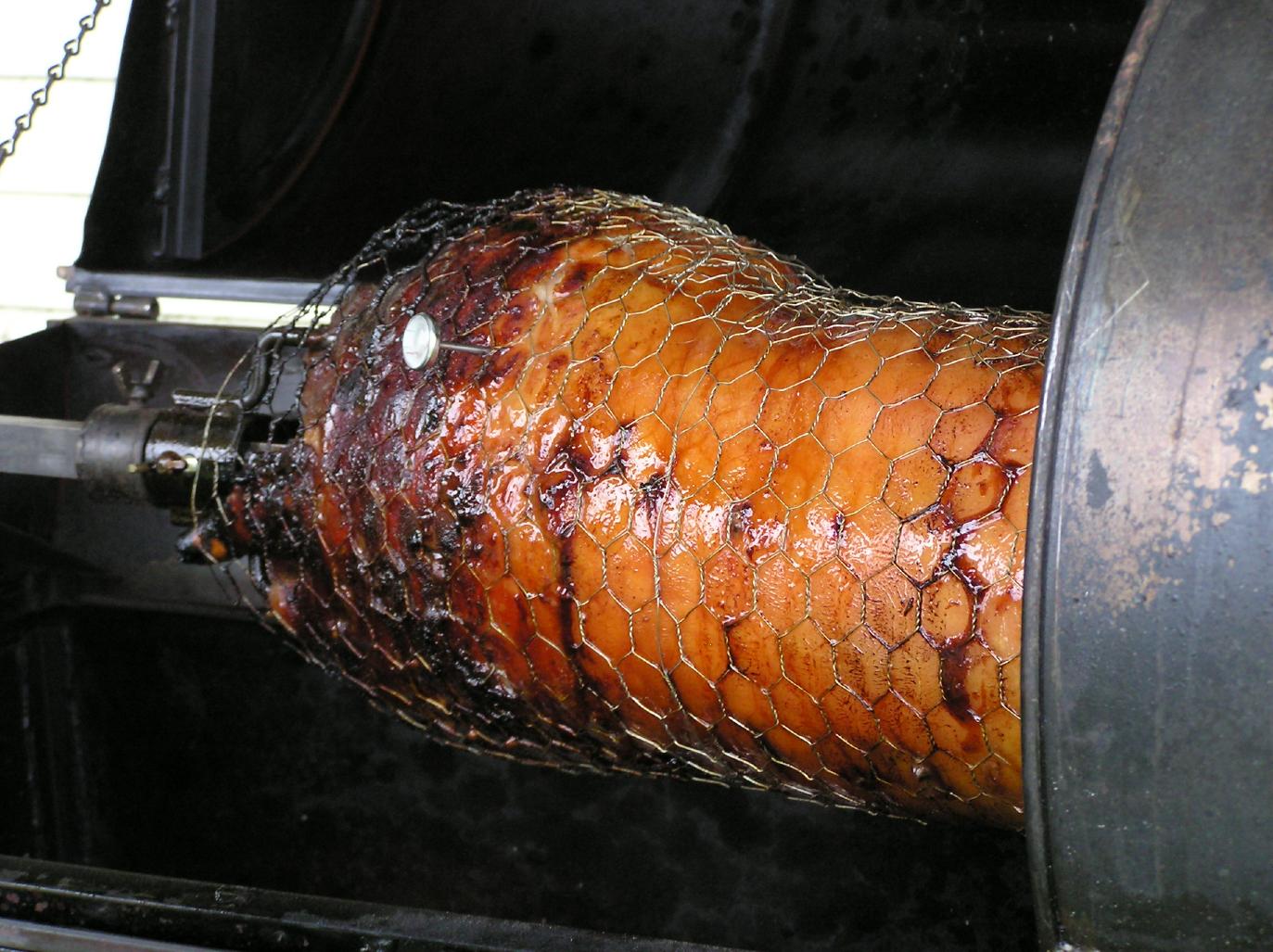
The whole pig and spit assembly is wrapped in chicken wire to keep the body from flopping around too much as the pig cooks and "loosens up."
|
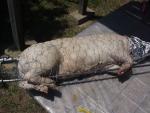
Ready to Burn
The pig is (finally!) ready
to go on the grill.
|
|
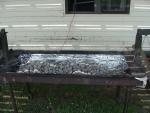
Fire's Ready
The fire is also ready for the pig.
|
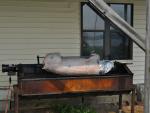
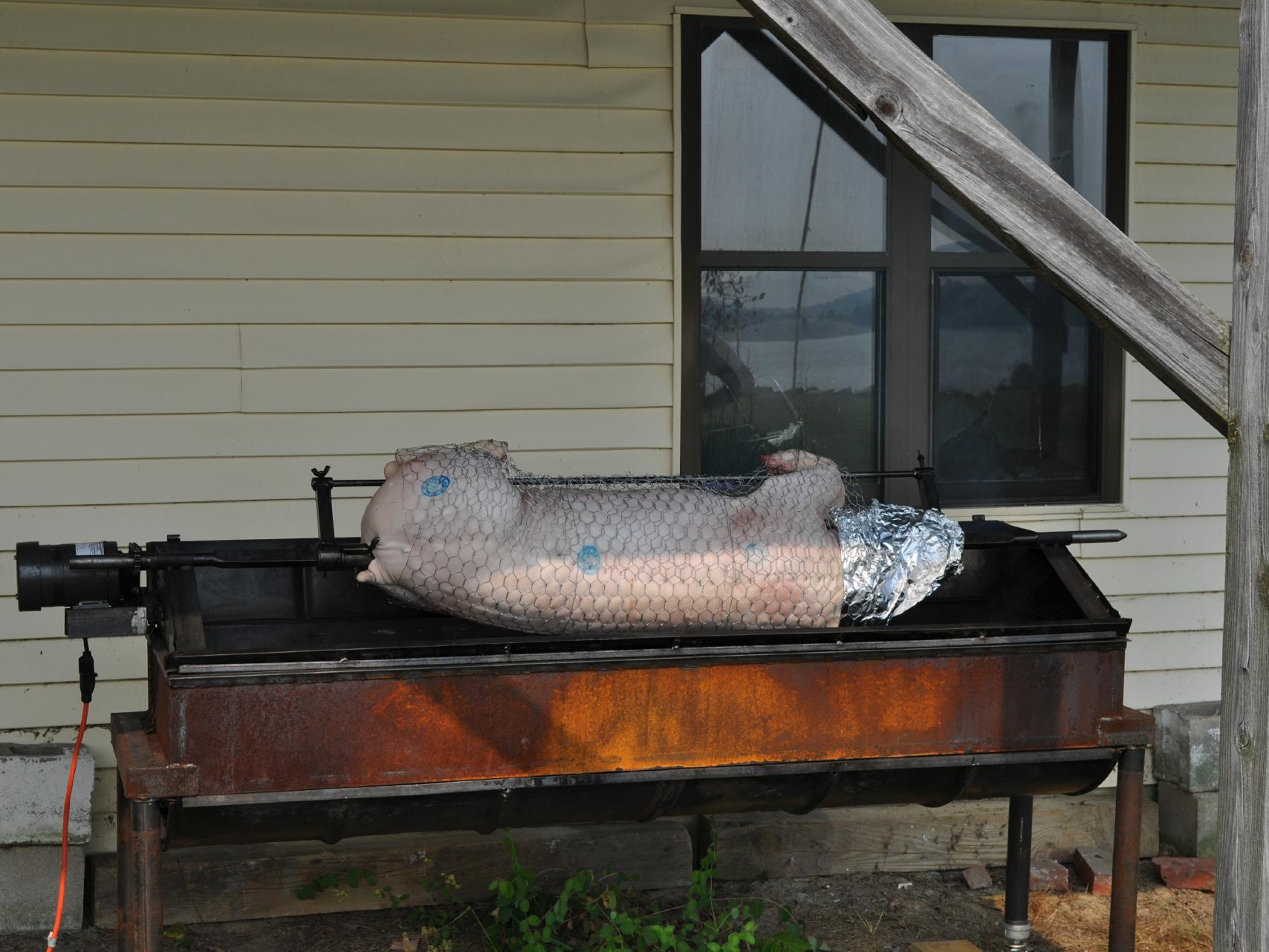
The Pig is on the Grill
Don't you love it when
a plan comes together?
Time to raise the pig flag!
Who knew that pigs get tattoos?
|
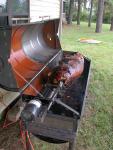
Cooking Nicely
Check the grill and add more charcoal about every half hour.
It is better to add small amounts of charcoal more frequently because adding a large amount all at once will cool the fire until the new charcoal fully ignites.
|
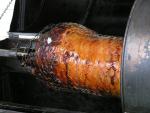
Checking the Ham Temp
It may look painful,
but the pig never flinched.
|
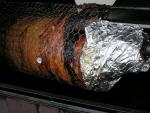
Checking the Shoulder Temp
It is most important to check
the temperature of the
thickest parts of the pig.
|
|
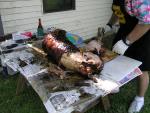
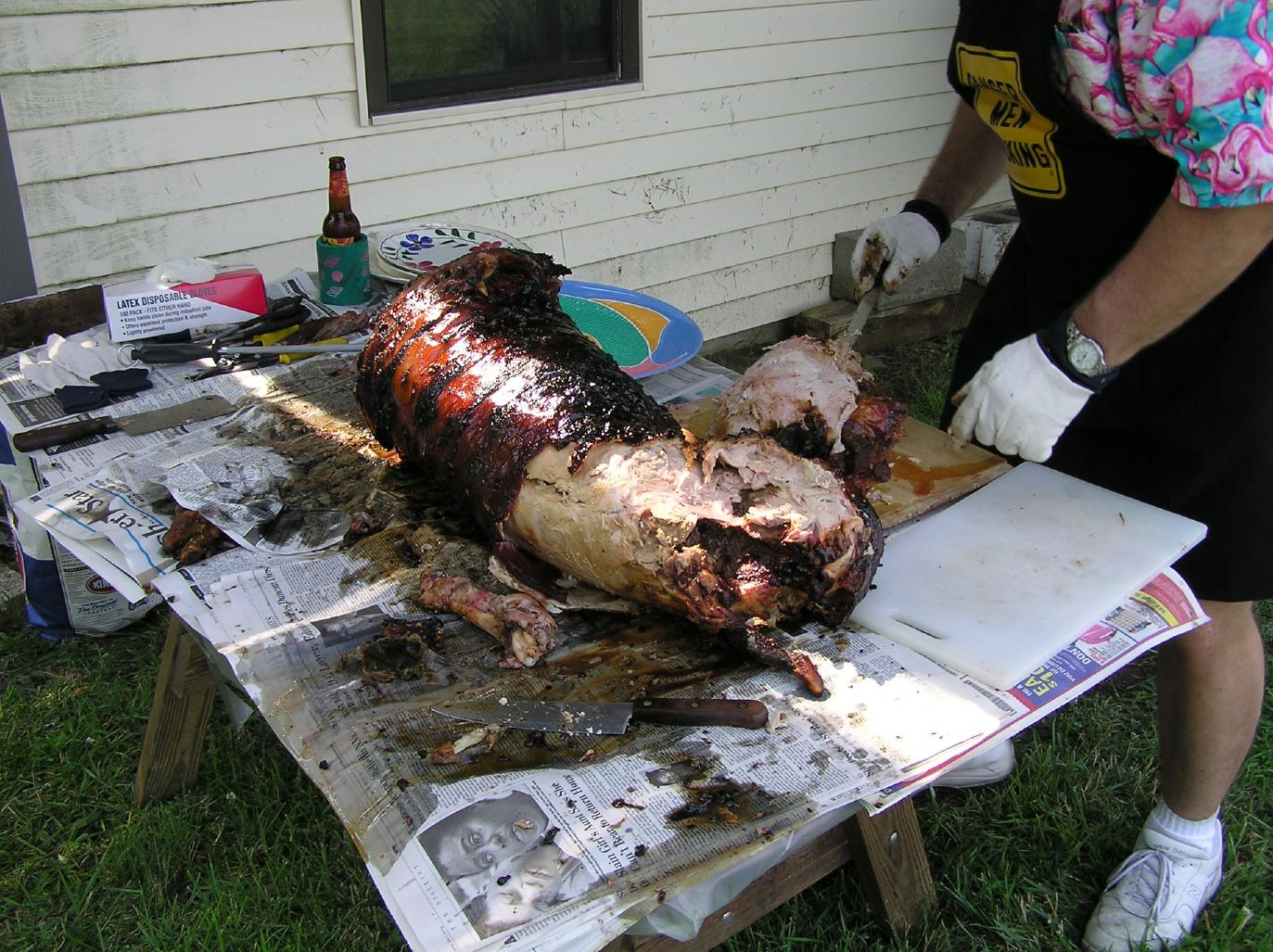
Carving
The cries of "Is it done yet?"
have changed to
"Hurry up! I'm starving!"
|
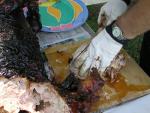
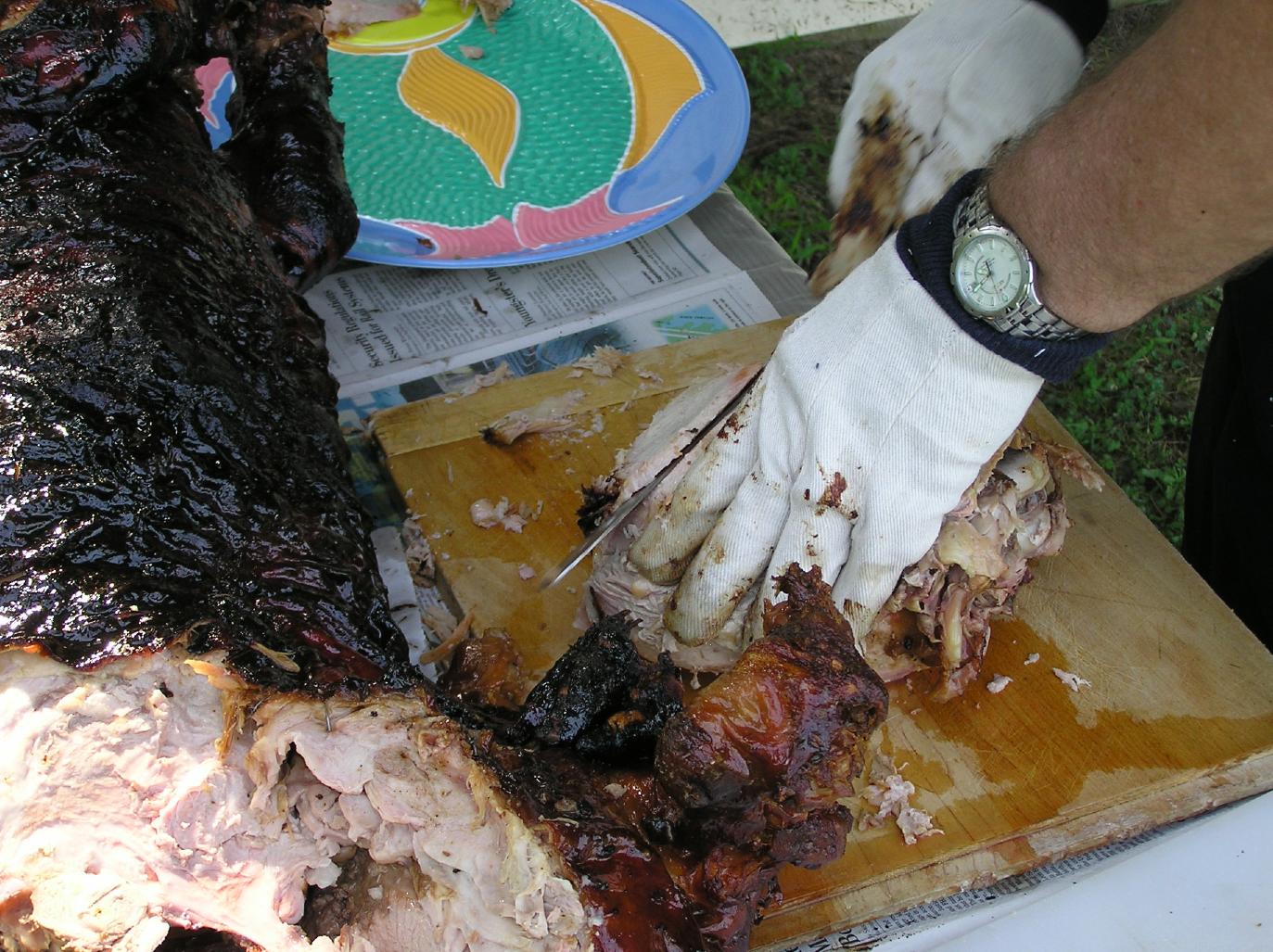
Carving Close-up
Be sure to use a very sharp knife, and keep a careful count of your fingers.
|
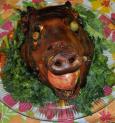
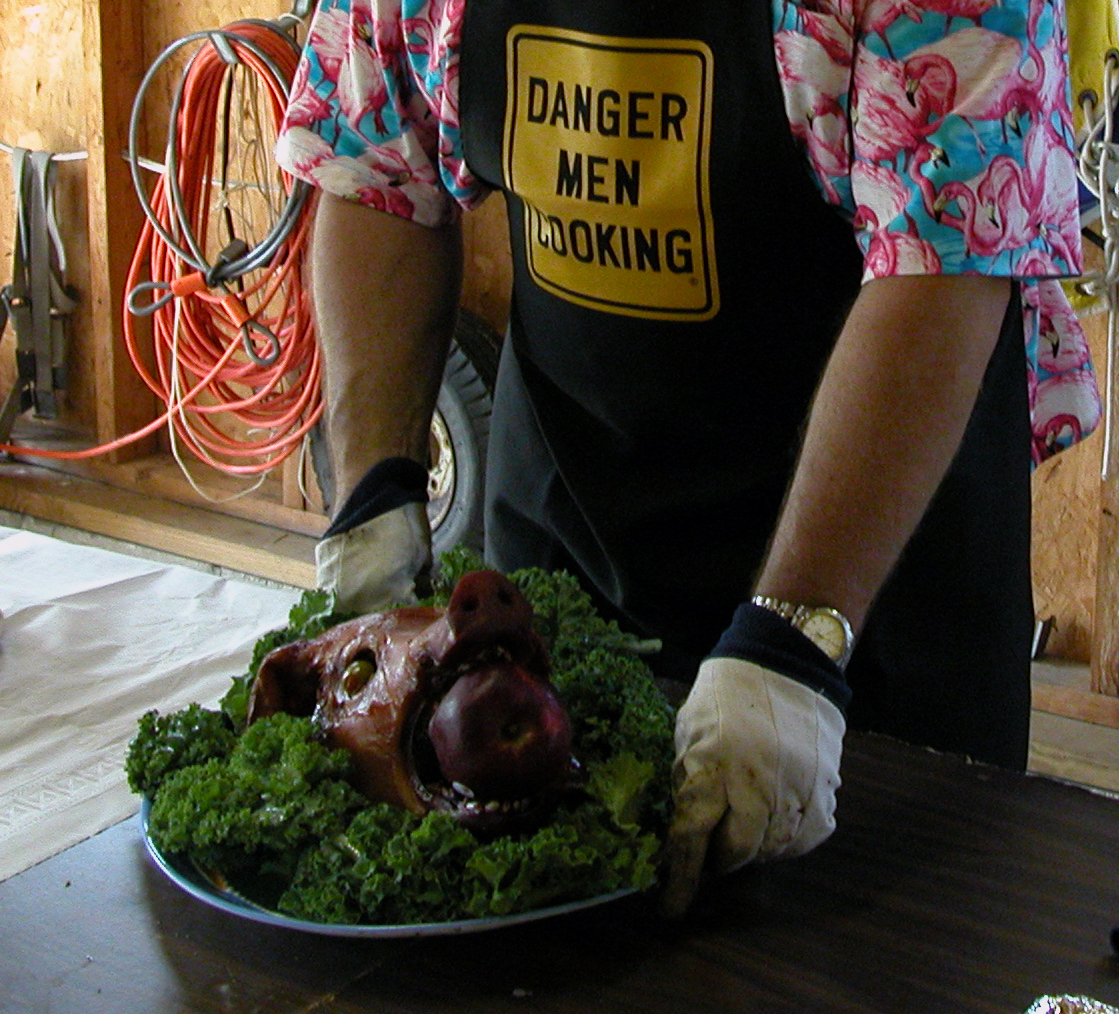
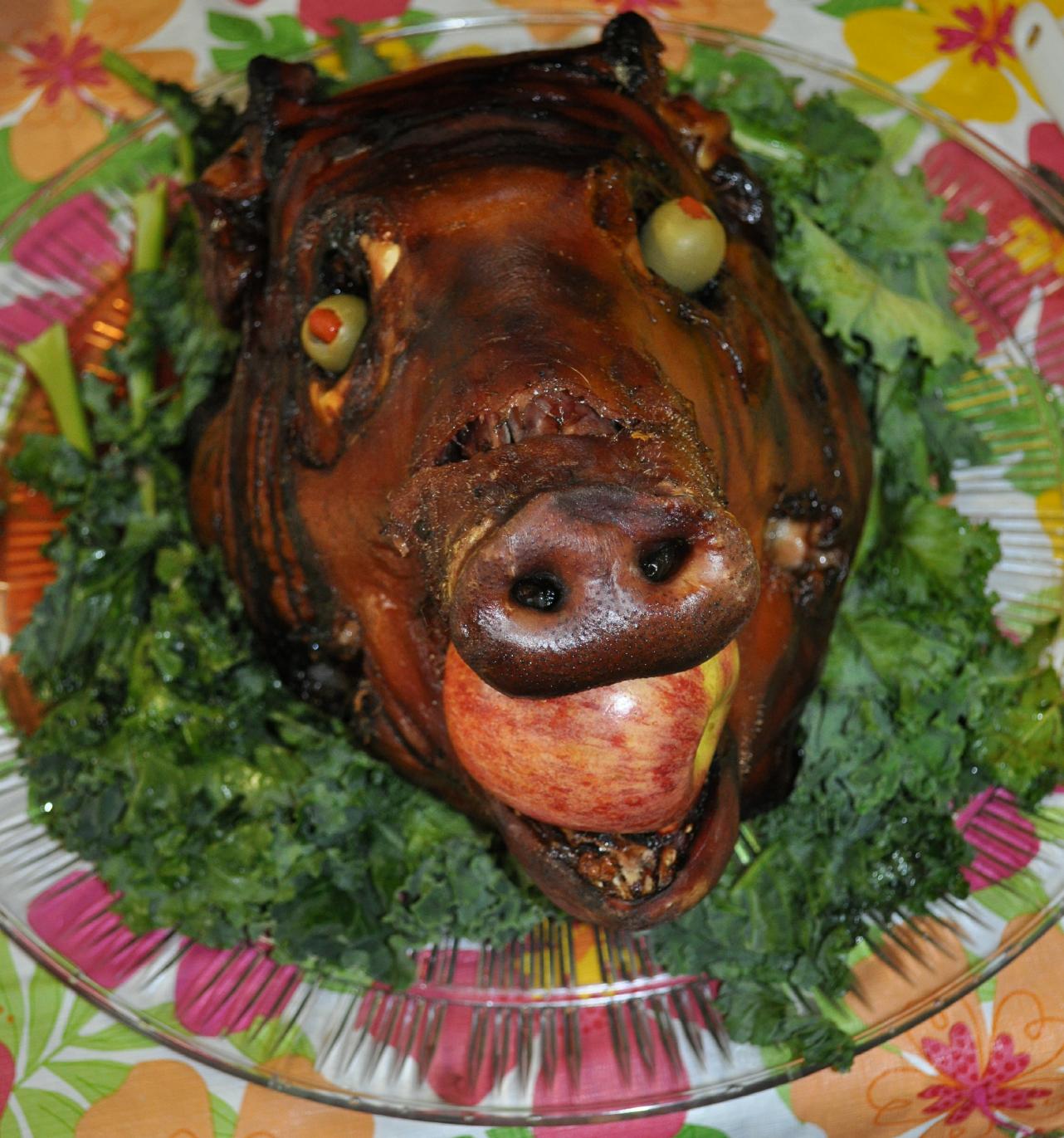
Pig's Head
The guest of honor's head on a platter, with the blindfold removed, dressed with green stuffed olives in the eye sockets, an apple in the mouth, set on a bed of kale greens.
A unique, if barbaric, presentation.
|
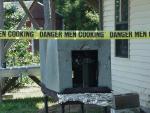
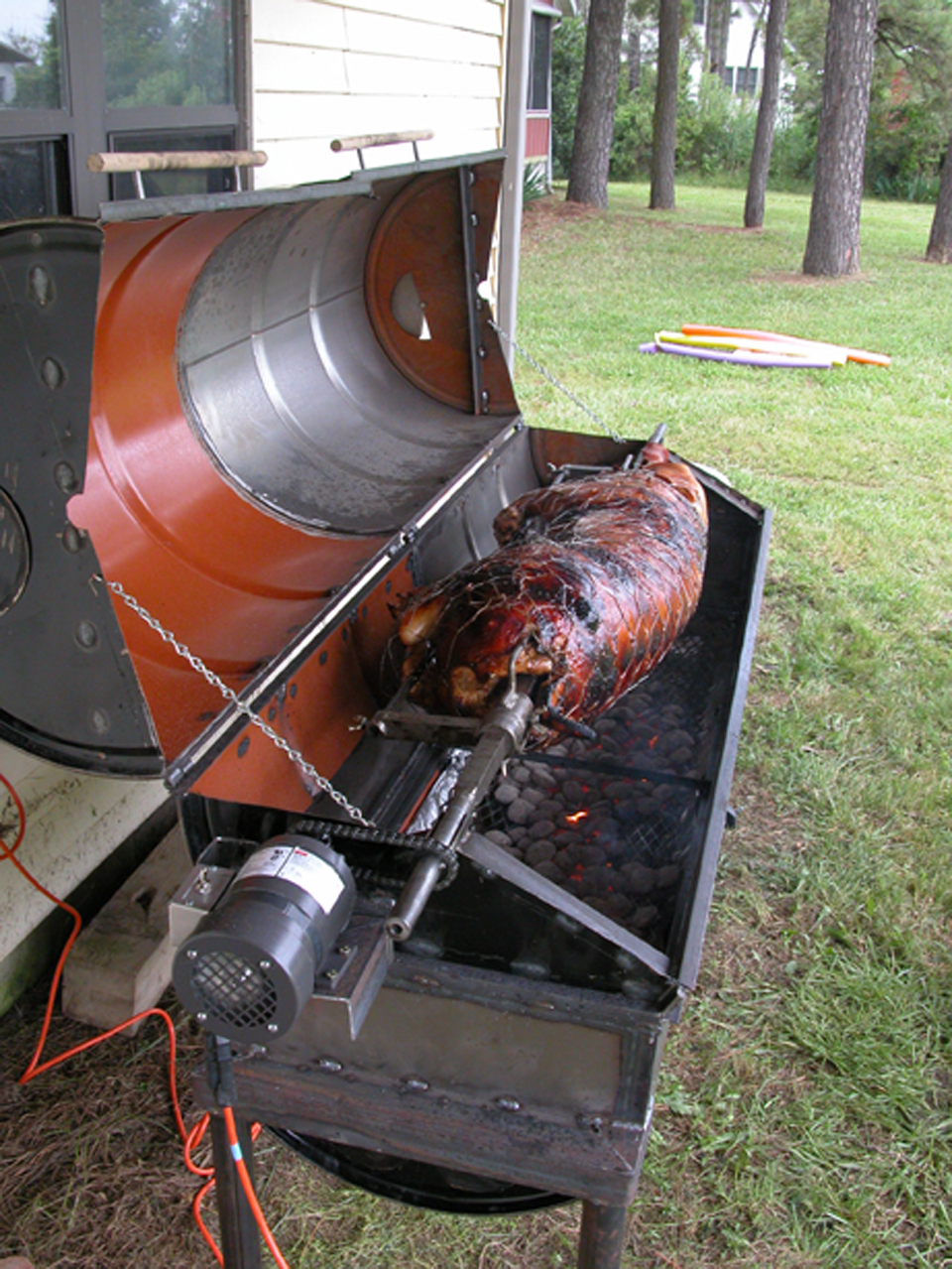
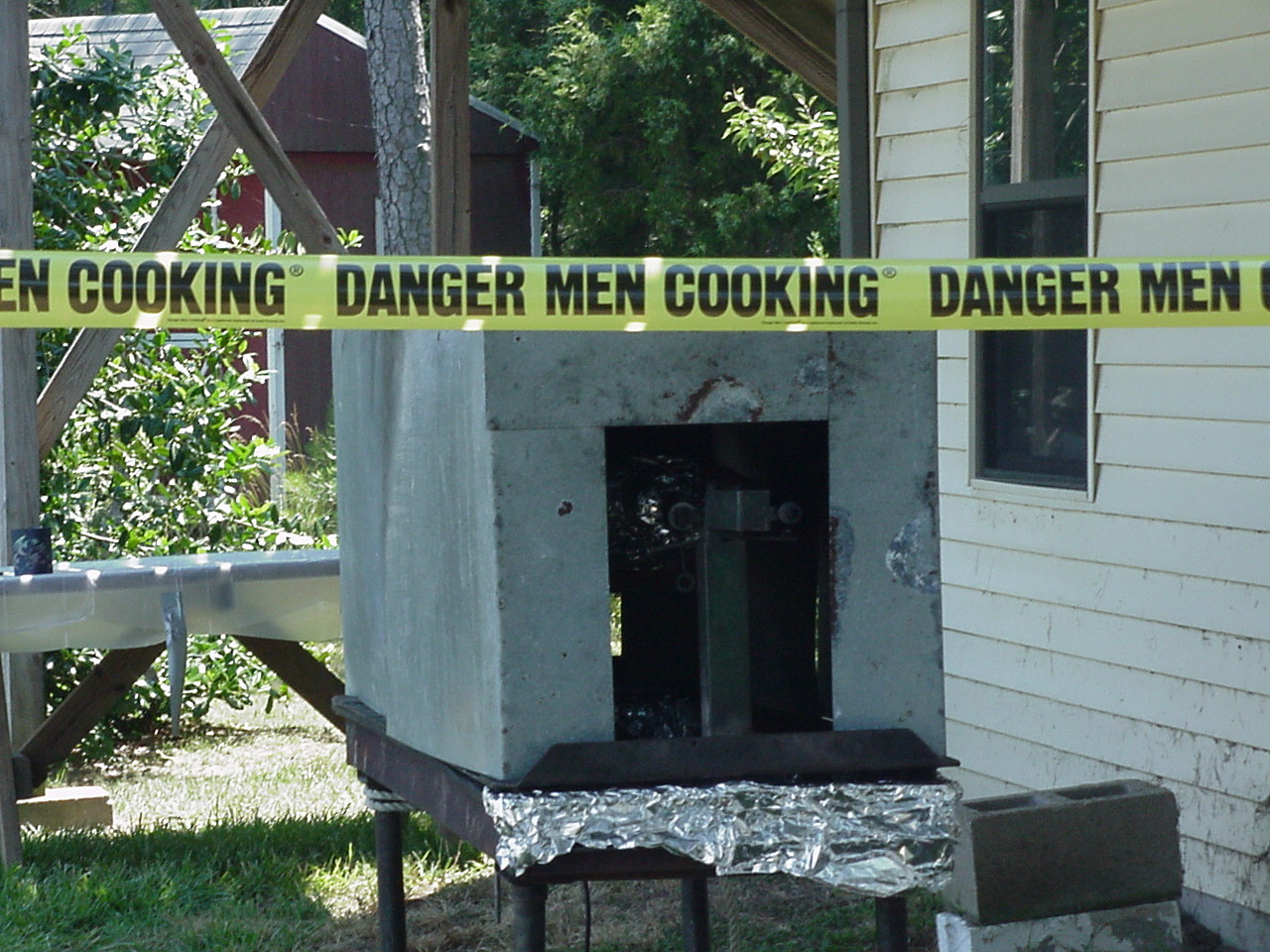
The Pig Houses
These custom-made sheet metal housings were originally used to enclose open rental grills to produce an oven effect,
which resulted in decreasing the cooking time significantly.
|
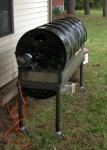
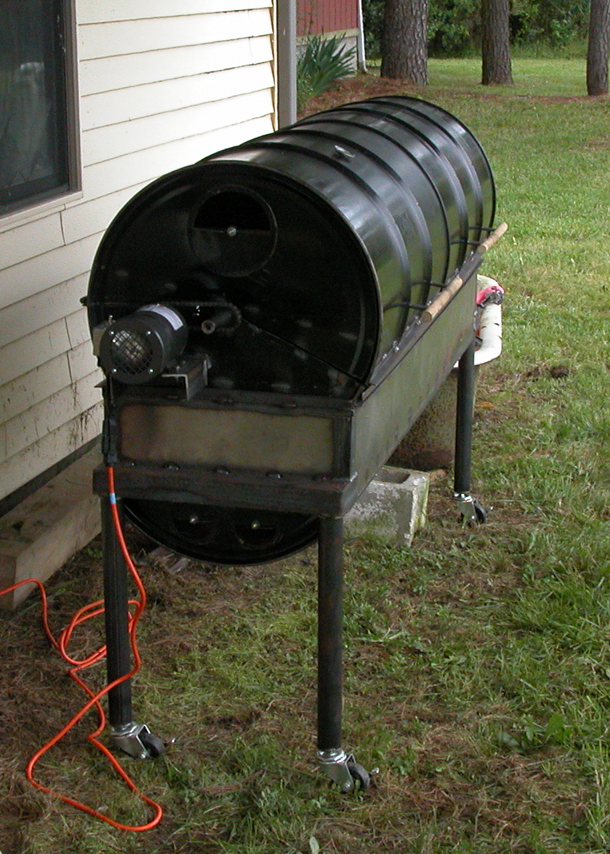
"The Incinerator"
This new custom-built grill has a completely enclosed cooking area and cooks an 80 pound pig in
5 hours, vs. 8 hours on an
enclosed rental grill.
|